

An Uninhabited Island Run by Pigs — and they Love Tourists
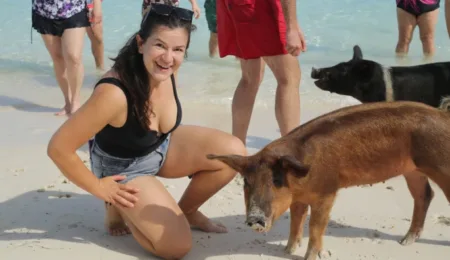
In the Exuma Cays of the Bahamas lies one of the world’s most unexpected tourist attractions — a beach run by pigs. Officially called Big Major Cay, Pig Island has no permanent human residents. Yet, it draws thousands of visitors each year for one reason — its friendly, swimming pigs. What began as a local curiosity has grown into one of the Bahamas’ most photographed and talked-about spots.
The pigs have adapted well to island life — drinking from ponds, resting under palms, and swimming confidently in the ocean.
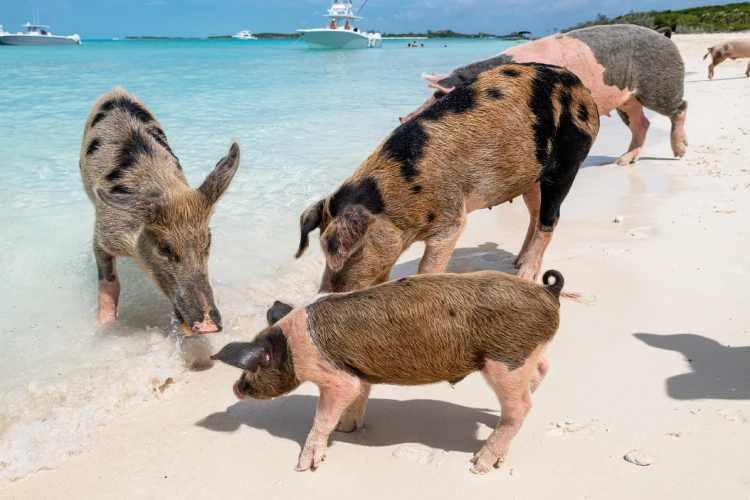
Big Major Cay is a small, uninhabited island surrounded by clear blue waters and white sand. But unlike most tropical destinations, this one is home to around 20 to 50 pigs and piglets that roam freely across the beach. The sandy stretch where they live is called Pig Beach, though tourists often refer to the entire island as “Pig Island.â€
How these animals arrived here remains one of the island’s enduring mysteries. Locals share a few theories: some say sailors left the pigs behind decades ago, intending to return and cook them, but never came back. Others believe the pigs survived a nearby shipwreck and swam ashore. A more practical story claims they were brought from nearby islands by farmers from Staniel Cay, who hoped to start a pig farm away from populated areas.
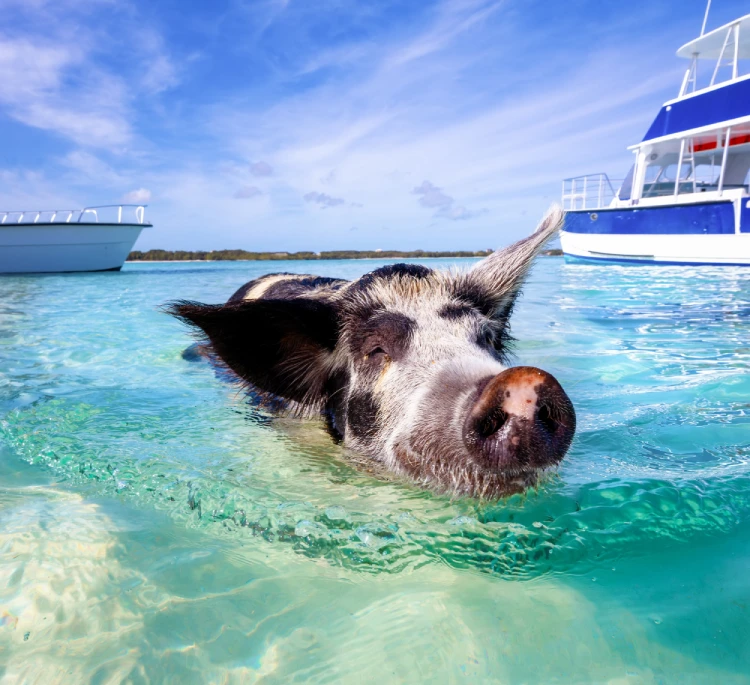
Regardless of how they arrived, the pigs have made Big Major Cay their home. Over time, they’ve adapted to island life — digging for freshwater from small ponds, resting under palm trees, and swimming confidently in the ocean. Despite their bulky size, the pigs are strong swimmers. They often wade out to greet incoming boats, hoping for snacks from tourists.
The pigs on Pig Island have learned to connect the sound of approaching boat engines with feeding time.
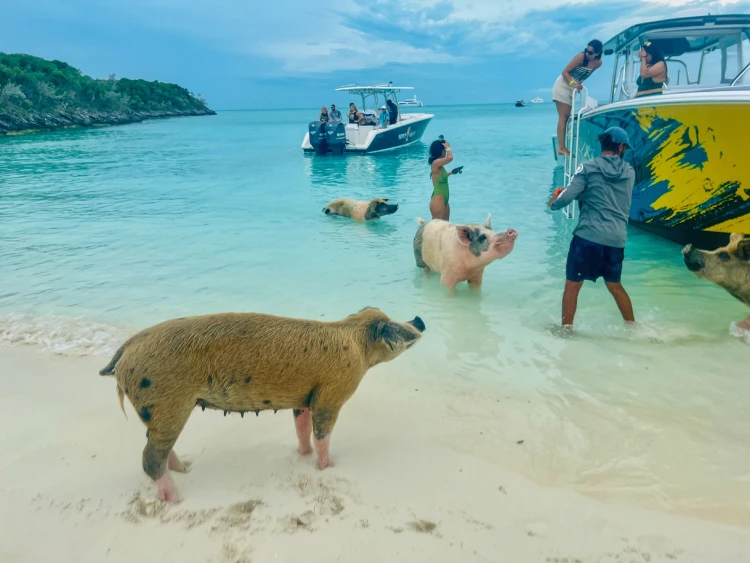
Tourism has entirely shaped life on Pig Beach. Visitors from around the world come by boat from Nassau or Staniel Cay to feed, photograph, and swim with the pigs. The animals have learned to associate the sound of boat engines with food, often paddling out as soon as they hear one approach.
While the experience seems idyllic, it hasn’t been without challenges. In 2017, several pigs passed away under unclear circumstances. Some reports suggested tourists had fed them alcohol and junk food, while others blamed ingestion of sand or contaminated water. The incident led to public concern and prompted the Bahamian government to introduce feeding guidelines and safety measures.
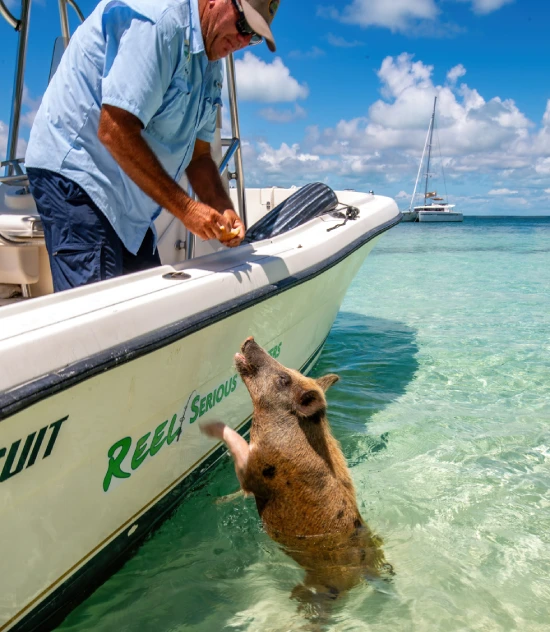
Today, strict rules govern how visitors interact with the pigs. Tourists are only allowed to feed them approved foods such as fruits, vegetables, or pig feed — and only while standing in shallow water, to prevent pigs from swallowing sand. Alcohol, processed snacks, and meat are strictly prohibited.
Caretakers from Staniel Cay, the nearest inhabited island, now monitor the pigs’ well-being. They supply fresh water, maintain feeding troughs, and keep a close watch during busy tourist seasons. The government has also installed freshwater tanks and shaded shelters to ensure the pigs remain healthy, especially during the dry months.
Despite these measures, experts continue to debate whether Pig Beach is sustainable in the long term. The pigs’ dependence on human food and constant tourist interaction raises concerns about their health and behavior. However, many locals view the swimming pigs as a symbol of the Exumas — a quirky but beloved part of Bahamian tourism that supports nearby communities through tours, lodging, and local businesses. [Source: 1,2]