Chinese Man Builds a Flying Hoverboard Inspired by Spider-Man
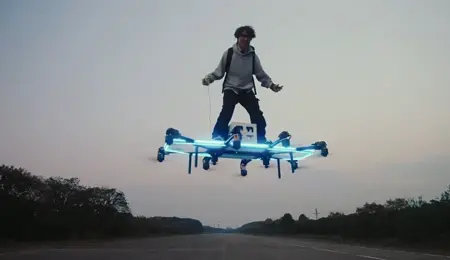
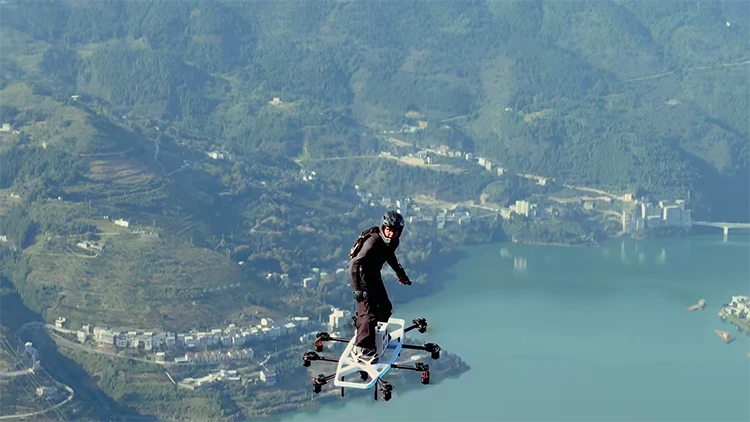
A Chinese man built a flying hoverboard and took it over mountains and rivers. Song Xingyu, a 26-year-old inventor from Hubei province, spent nearly two months developing the machine, which resembles the Green Goblin’s flying glider from the Spider-Man films.
Song turned a Spider-Man villain’s flying glider into a real machine.
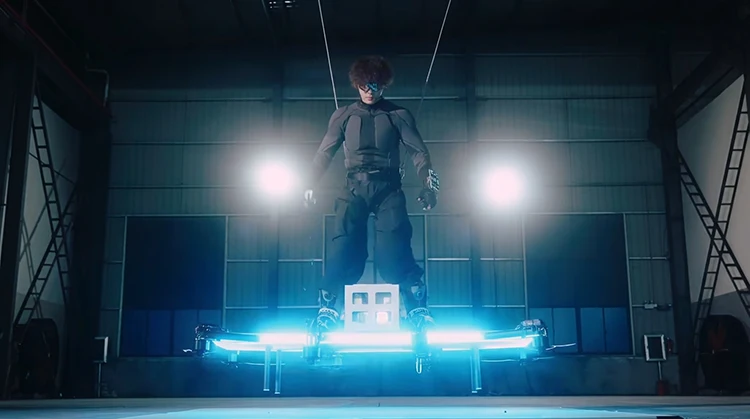
Known online as “Amazing Ayu,” Song has attracted more than three million followers by sharing videos of his homemade flying inventions.
His latest creation is an electric-powered hoverboard designed to carry up to four adults. It uses an AI monitoring system to track its operation and help manage the flight.
However, getting the machine off the ground was not straightforward. Song’s first version used small turbojet engines but caught fire during testing. He then abandoned that design and switched to electric propulsion.
After nearly two months of work, he completed the hoverboard and began practicing balance and flight control. During China’s National Day holiday in October, he took it on a major test flight in Enshi, Hubei province.
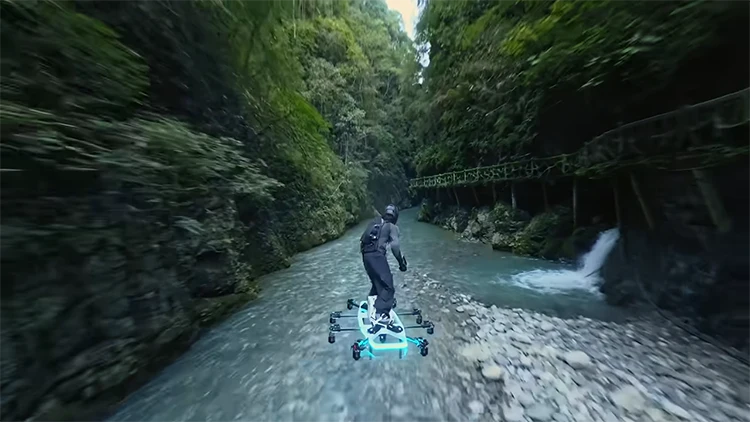
He flew over mountain peaks, city streets, and the Yangtze River before landing safely in a canyon. A video of the flight, shared on October 15, attracted millions of likes on Douyin, China’s popular short-video platform.
His journey from a lumberyard to a flying machine began at 14.
Song’s interest in aviation started after he watched a television program about aircraft testing. Fascinated by flying machines, he began collecting scrap materials to build model aircraft.
At the time, he was working at his father’s lumberyard after leaving school at 14. He initially relied on donations from aviation enthusiasts to fund his experiments.
In June 2022, he took out loans to convert an unused woodworking shed belonging to his father into a personal laboratory. However, his plans suffered a major setback when he was scammed and reportedly accumulated debts of 2.4 million yuan.
In December 2025, technology company Insta360 provided 1.8 million yuan in funding through its Think Bold Challenge Fund, allowing him to continue developing his inventions.
Some of his earlier flying experiments nearly ended in disaster.
The hoverboard is not Song’s first unusual flying project. In May 2024, he spent 22 days building a remote-controlled aircraft that he planned to send into the upper atmosphere using a helium balloon. Strong winds destroyed his campsite and launch equipment before the experiment could succeed.
Another attempt was considerably more dangerous. In late 2024, Song jumped from a helicopter at an altitude of 5,000 meters while wearing a homemade jet-powered flying device.
His main parachute failed to open, and the backup deployed only about 600 meters above the ground. Before the jump, he had recorded a message asking people not to follow his example.
Despite these setbacks, Song has continued experimenting with flight technology. He believes that starting with very little has left him with little to fear from failure.
His latest invention has also prompted suggestions about possible practical applications. Some viewers believe similar flying machines could eventually assist with search-and-rescue operations.
For now, Song is focused on improving his hoverboard and testing how much further he can push its flying capabilities.