Shrek the Sheep Avoided Shearing for Six Years and Grew a 27 kg Fleece
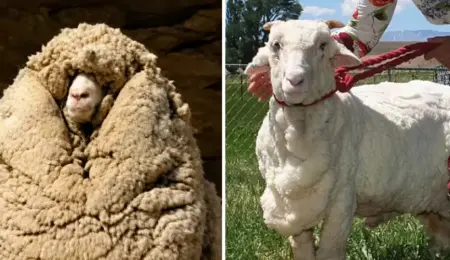
Shrek was a Merino sheep from New Zealand who became famous in 2004 after avoiding shearing for approximately six years. During that time, he reportedly hid in caves and escaped repeated attempts to gather the farm’s sheep. When shepherds finally found him, his fleece had grown so large that he looked almost unrecognizable. His wool weighed around 27 kg, several times what shepherds normally collect from a sheep during annual shearing.
Shrek avoided shearing for six years by staying away from the flock.
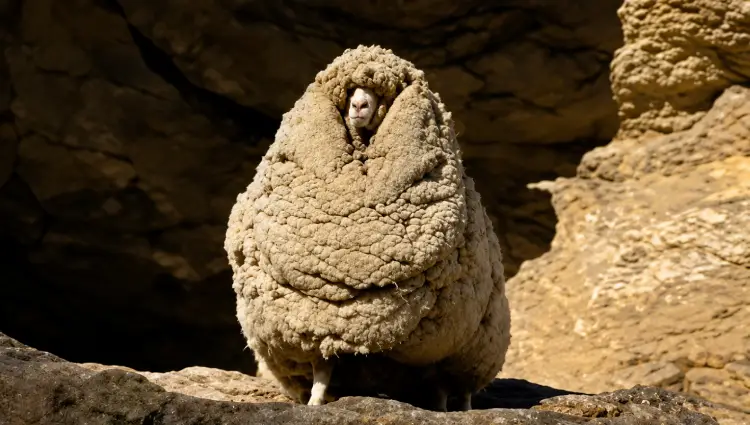
Shrek lived at Bendigo Station, a sheep farm in Central Otago on New Zealand’s South Island. The region has rugged hills and open grazing land, where farmers use shepherds and working dogs to gather sheep for routine care.
This process, known as mustering, allows farmers to check their animals, shear their wool, and manage the flock. However, Shrek avoided being caught for years.
Reports say he spent much of this time hiding in a cave, away from the main flock. Shepherd Ann Scanlan discovered him on April 14, 2004, after he had escaped shearing for approximately six years.
Shrek’s story attracted attention because missing even one annual shearing can leave a sheep with an unusually thick coat. Missing six years meant his wool kept growing season after season without being removed.
Although people often describe Shrek as a sheep that deliberately outsmarted his handlers, no evidence suggests he planned his escape. Available accounts show that he avoided mustering and was eventually found in a cave, but they don’t explain exactly how he stayed hidden for so long.
His fleece weighed around 27 kg when he was finally shorn.
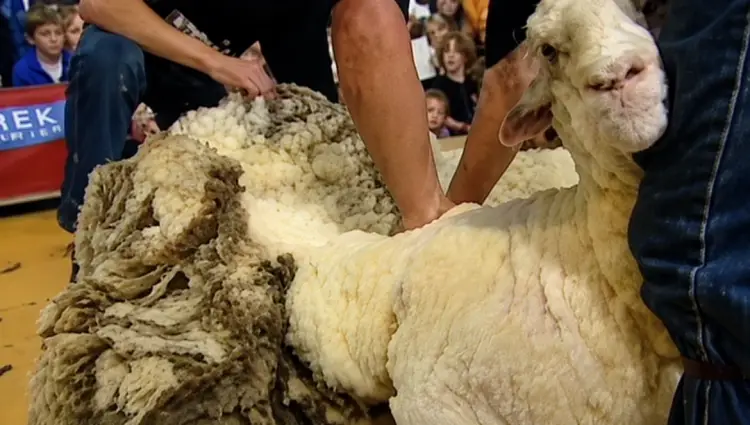
Shrek was shorn on April 28, 2004, in an event that attracted widespread media attention. Peter Casserly, a former world-champion blade shearer, removed the enormous fleece using traditional hand blades.
Reports put the fleece’s weight at approximately 27 to 27.5 kg, or around 60 lbs. Some accounts also reported wool lengths of up to 38 centimeters, although this figure should not be treated as the length of every part of his coat.
For comparison, an average Merino fleece weighs around 4.5 kg. Shrek’s fleece therefore weighed roughly six times that of a typical annual fleece.
Contemporary reports say the shearing took about 20 to 25 minutes. Once the wool was removed, Shrek looked like an ordinary sheep again. His transformation was striking because the thick, matted fleece had made his body appear much larger than it actually was.
The shearer also left Shrek with some wool and provided him with a protective jacket because winter was approaching. After years in a heavy coat, he needed protection from the cold after shearing.
The fleece itself became a major part of his story. New Zealand Merino clothing company Icebreaker arranged for five limited-edition jerseys to be made from his wool. One of these garments later joined the collection at Te Papa, New Zealand’s national museum.
Shrek became a celebrity and helped raise money for children’s health research.
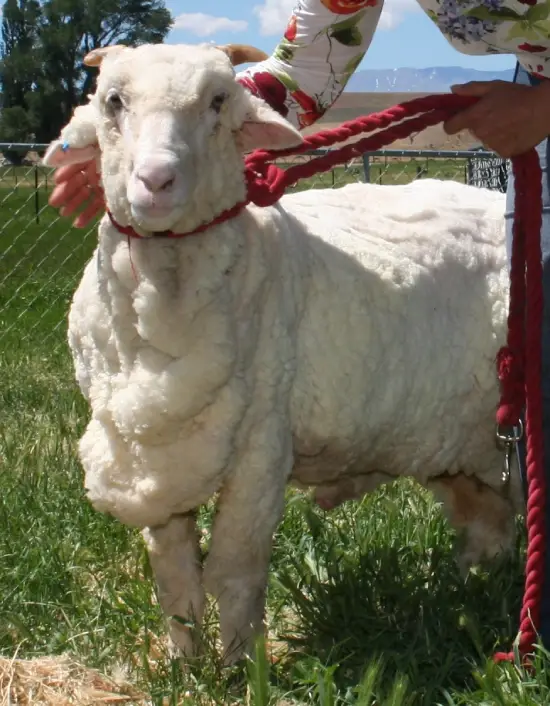
Shrek’s fame continued well beyond his first shearing. International news reports covered his story, and he became a popular figure in New Zealand. He even met then-prime minister Helen Clark in 2004.
His celebrity status also served a charitable purpose. Shrek made public appearances that helped raise money for Cure Kids, a New Zealand charity that supports research into serious childhood illnesses. Later reporting by the Otago Daily Times said he helped raise more than $150,000 for the organization.
In 2006, Shrek was shorn again during a publicity event on an iceberg off the Otago coast. The unusual setting attracted further attention and kept his story in the public eye.
Shrek died in June 2011 at Bendigo Station. He was approximately 16 years old, and he was euthanized on veterinary advice because of age-related health problems and pain.
Te Papa later displayed his preserved body in 2014, allowing visitors to learn about the sheep.