At 72, British Powerlifter Is Still Squatting 100kg and Competing at the Highest Level
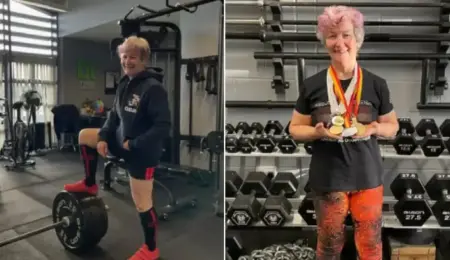
72-year-old British powerlifter Melanie Lester is showing that age does not have to mean giving up strength training. A former teacher from Sudbury, Suffolk, she began lifting weights in her early 60s and has since competed internationally. In June 2026, she won the Masters 4 category at the British Classic Masters Powerlifting Championships, recording a 100kg squat.
Melanie Lester started lifting weights in her 60s and later became a competitive powerlifter.
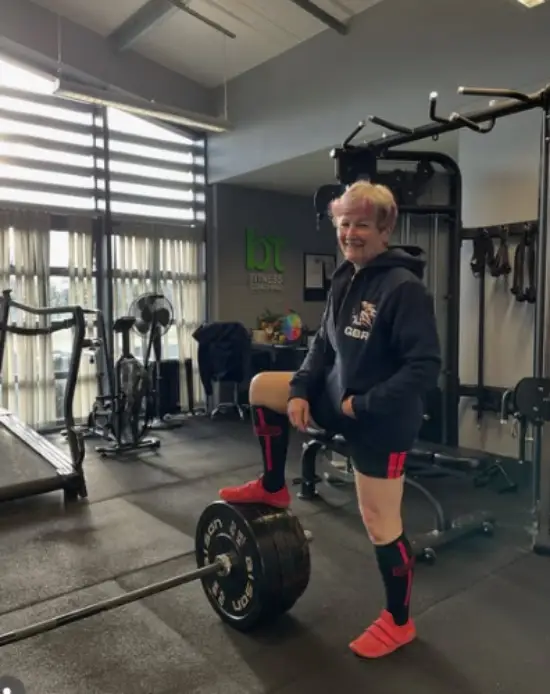
Lester did not begin powerlifting as a young athlete. According to her coaching profile, she started exercising in her early 60s and went from using a barbell for the first time to competing at the international level. She now leads a strength-training group for older adults through u3a in Sudbury.
Her competition record shows how much her strength has developed. At the 2026 British Classic Masters Championships, Lester competed in the women’s Masters 4, 69kg class. She successfully squatted 87.5kg, 95kg, and 100kg, giving her a best squat of 100kg. She also recorded a 45kg bench press and a 135kg deadlift, finishing with a 280kg total.
Her international results show a similar level of performance. At the 2025 IPF World Classic and Equipped Masters Powerlifting Championships, Lester recorded an 87.5kg squat, a 45kg bench press and a 135kg deadlift for a 267.5kg total.
These numbers are notable because powerlifting requires substantial strength across three main movements: the squat, bench press, and deadlift. Lester’s results demonstrate that significant strength can be developed and maintained well into the 70s.
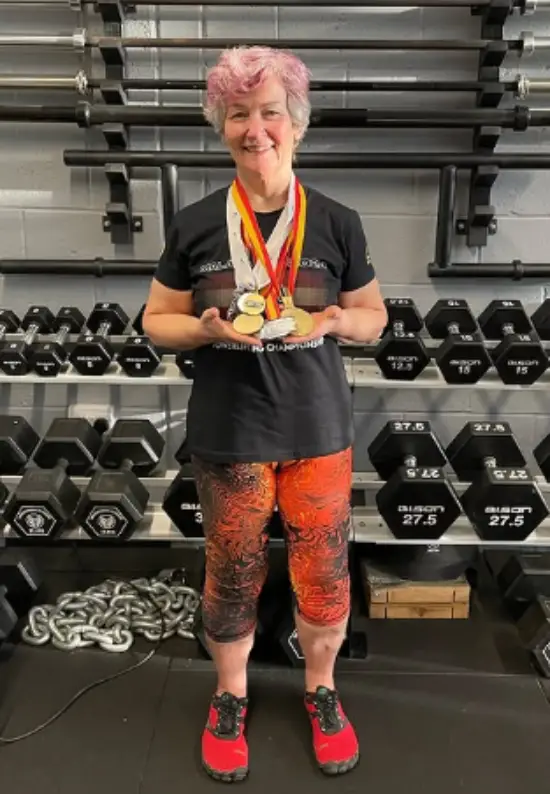
Lester won the over-70s British powerlifting title after completing a 100kg squat.
Lester’s story also highlights an important issue in healthy aging: maintaining muscle and physical function.
Muscle strength naturally becomes increasingly important as people grow older. Strength affects everyday activities such as standing from a chair, climbing stairs, carrying shopping and maintaining balance. Resistance exercise gives muscles a reason to continue adapting to physical demands.
The World Health Organization recommends that adults aged 65 and over perform muscle-strengthening activities targeting the major muscle groups at least two days a week. Older adults are also advised to undertake regular aerobic activity, while those with poor mobility should include activities that improve balance and help prevent falls.
The recommendation does not mean older people need to become competitive powerlifters. Strength training can take many forms, including bodyweight exercises, resistance bands, dumbbells and other weights.
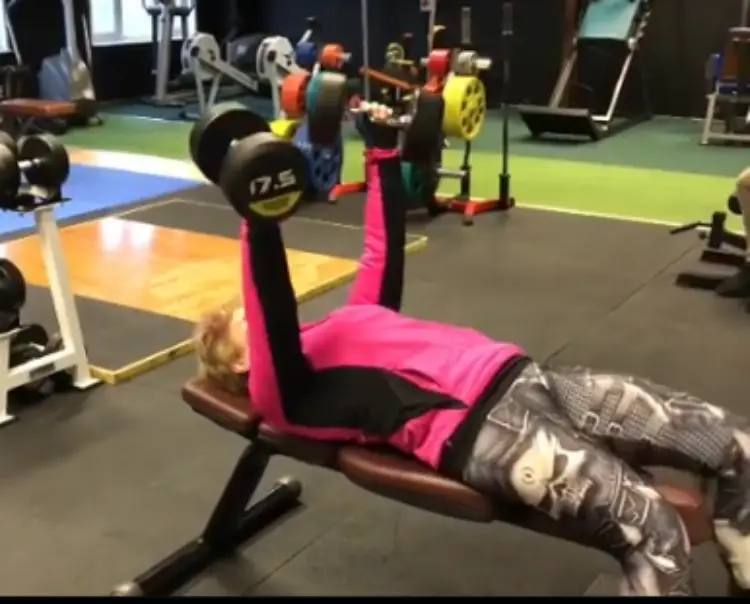
Strength training can help older adults maintain muscle strength and physical function.
One concern associated with aging is declining bone strength. The Royal Osteoporosis Society says that bones become weaker when they are not used and that exercise can help maintain or improve bone strength.
Strength exercise works by making muscles push and pull against resistance. This places forces on bones and can help maintain or improve their strength. Examples include squats, lunges and resistance exercises using body weight, bands or weights.
The organization recommends gradually building strength rather than immediately attempting heavy lifts. Its guidance suggests strength exercises on two to three days each week, with at least a day’s rest between sessions. A typical starting point can involve eight to 12 repetitions, with the resistance increased gradually as strength improves.
This is an important distinction when looking at Lester’s achievements. Her ability to squat 100kg should not be treated as a target that every older person needs to reach. It represents the result of years of training and competition. For someone new to exercise, the appropriate starting point could be considerably lighter.
Lester’s story shows that competitive strength training can continue well into later life.

Lester’s example is not simply about how much weight a 72-year-old can lift. It illustrates the wider role that strength and physical activity can play in remaining active later in life.
Her continued participation in competition and her work teaching other older adults also challenge the idea that exercise becomes less relevant with age. Official physical activity guidelines continue to recommend muscle-strengthening exercise for older adults, while bone-health guidance supports progressive strength training as part of an active lifestyle.
Powerlifting at a competitive level is not necessary for healthy aging. But Lester’s progress shows what can happen when strength training becomes a long-term activity rather than something associated only with younger people.
At 72, she is still training, competing and helping others learn how to lift. Her 100kg squat is an impressive competition result, but the broader lesson is simpler: getting older does not mean strength training has to stop.