10 Things That Sciences Still Can’t Explain 4.4k views
Patents are usually associated with practical inventions, but some inventors have come up with solutions as unusual as the problems they address. Some were designed to make everyday tasks easier, while others explored ideas that sound like they belong in science fiction. Here are 10 weird patented inventions and what they were supposed to do.
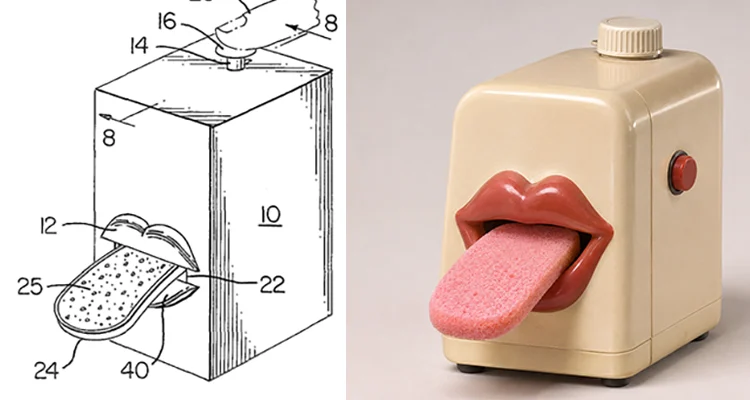
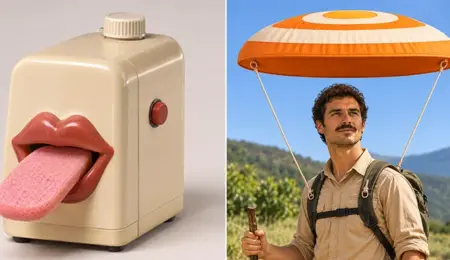
Before self-adhesive stamps became common, people had to lick the back of postage stamps to activate their adhesive. Donald B. Poynter came up with an unusual alternative. His invention, described in US Patent 4,300,473, granted on November 17, 1981, featured a mechanical tongue designed to moisten stamps without requiring people to lick them.
The device had a sponge-like applicator shaped like a human tongue. Pressing a button caused it to emerge from an opening designed to look like human lips. The applicator absorbed water from a container inside the device before extending outward to moisten stamps and envelopes.
Self-adhesive stamps eventually solved the hygiene issue, keeping this prosthetic licker out of offices.
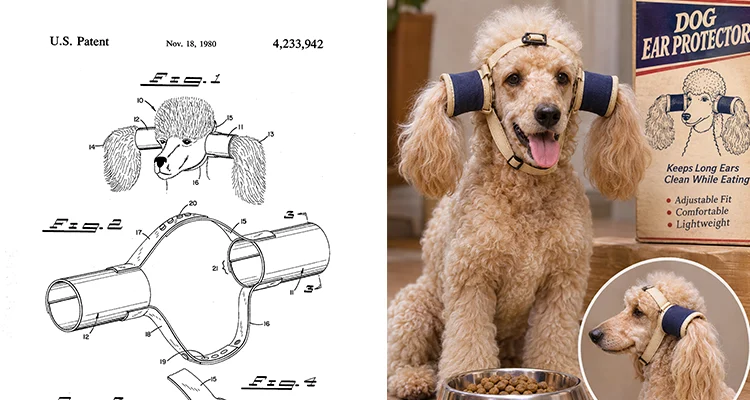
Long-eared dogs can have an annoying problem at mealtimes. Their ears may dip into their food or water, leaving them dirty.
An invention described in US Patent 4,233,942, granted on November 18, 1980, offered a solution. It consisted of two tubular protectors that held a dog’s ears away from its mouth. Adjustable positioning straps secured the protectors to the dog’s head.
The protectors were made from flexible, self-forming material that could open to accommodate the ears and then return to a tubular shape.
While the original patented design did not become a mainstream hit, modern variations called “snoods” are sold by specialty pet brands today.
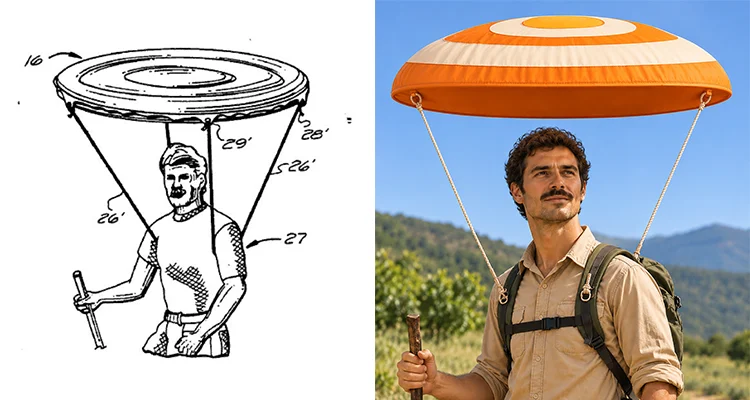
Carrying an umbrella can be inconvenient, especially when you need both hands free. An inventor proposed a sunshade that could hover above a person’s head instead.
The design, described in US Patent 5,076,029, granted on December 31, 1991, used two sheets of flexible material sealed together to form a balloon-like canopy. It was filled with helium for buoyancy and connected to the wearer with flexible cables.
A harness that passed under the arms helped keep the shade above the person’s head as they moved.
However, strong winds made the floating shade impractical to control, preventing it from reaching commercial stores.
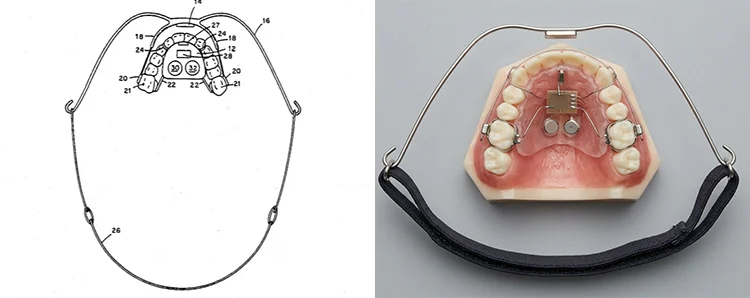
Imagine having an alarm clock inside your mouth that keeps beeping until you do what you are supposed to. That was the idea behind an orthodontic reminder device patented by Rupert W. Knierim.
Described in US Patent 4,764,111, granted on August 16, 1988, the device was designed for patients who needed to wear orthodontic headgear for a specified number of hours. A mouthpiece contained a battery, electronic circuit, magnetic switch, and tiny beeper.
A magnet attached to the orthodontic headgear activated the switch when the headgear was properly worn. If the patient removed it during the required period, the beeper sounded inside their mouth.
The alarm would stop when the patient put the headgear back on.
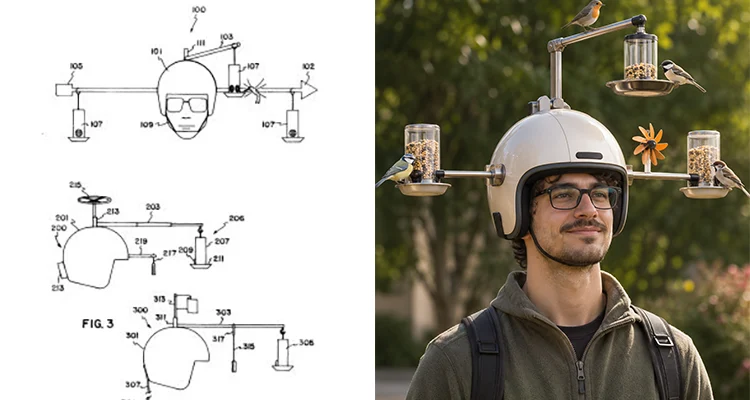
What if you could attract birds so close that you could watch them feeding without leaving your seat? One inventor designed a helmet to make that possible.
David M. Leslie’s invention, described in US Patent 5,996,127, granted on December 7, 1999, featured a hat or helmet with outward-extending poles. Small bird feeders could hang from these poles, bringing birds within close viewing distance.
The design even included an option to attach magnifying glasses or cameras so users could observe the birds more closely. A rear strap helped prevent the helmet from tipping forward under the weight of the feeders.
The patent was intended for birdwatchers who wanted to observe hummingbirds and other flying animals up close.
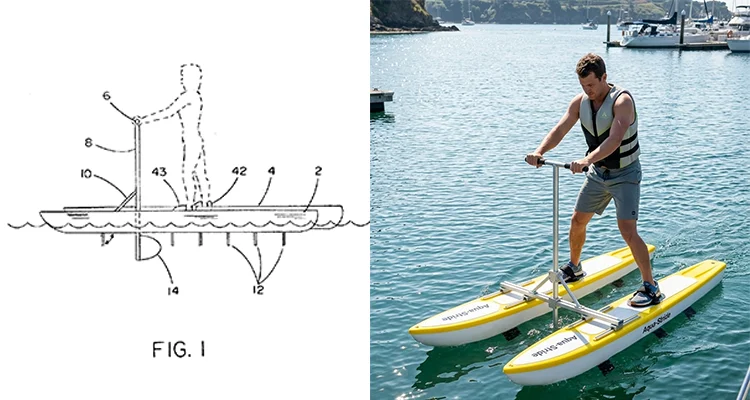
What if you could cross a lake using a motion similar to cross-country skiing? Walter G. Rothschild proposed a pair of specially designed floating skis that would allow people to propel themselves across water without a boat or motor.
Described in US Patent 6,855,024, granted on February 15, 2005, the invention consisted of two long, buoyant skis with foot supports to secure the user’s feet.
The unusual part was the propulsion system underneath. Each ski had hinged flaps that folded backward to reduce water resistance when pushed forward but turned upright when pushed backward, catching the water and driving the user ahead.
A connecting frame kept the skis parallel while letting them slide independently, much like cross-country skiing. The design also included handlebars connected to a rudder for steering and poles for balance.
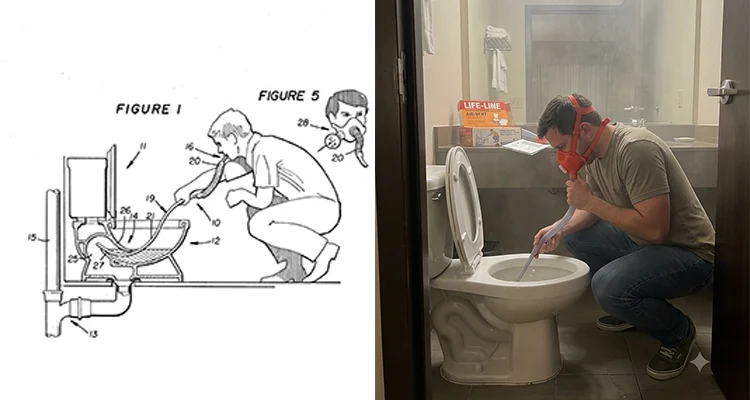
A fire can make it dangerous to breathe inside a building, especially when smoke fills the room. William O. Holmes proposed an unusual device intended to help people trapped in such situations.
His invention, described in US Patent 4,320,756, granted on March 23, 1982, consisted of a breathing tube connected to a mouthpiece. The tube was designed to pass through the toilet’s water trap and reach the plumbing vent system, which the patent assumed would provide access to fresh air.
The design also described an optional air filter. Users were supposed to flush the toilet and clear water from the tube before breathing through it.
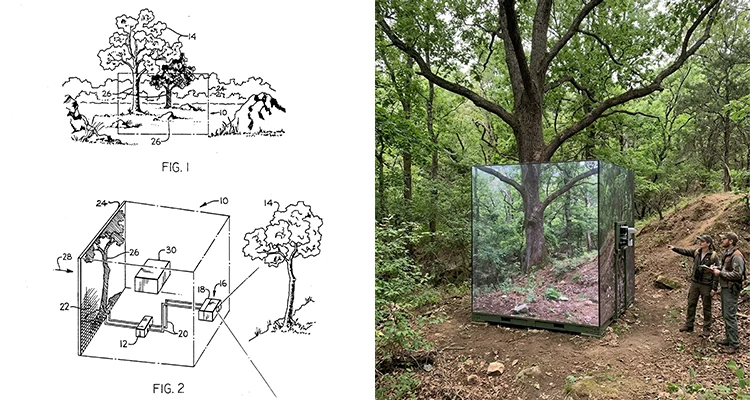
An invention that sounds like something from a science-fiction film was described in US Patent 5,307,162, granted on April 26, 1994.
The proposed cloaking system used cameras or other sensors to capture the background behind an object. A processor then recreated that image on a display shield positioned between the object and an observer.
From the observer’s perspective, the displayed background would make the object appear to blend into its surroundings.
The patent even described larger versions using cylindrical or spherical shields to conceal vehicles or people. However, the system was not true invisibility. It relied on displaying a carefully recreated image to create the illusion of transparency.
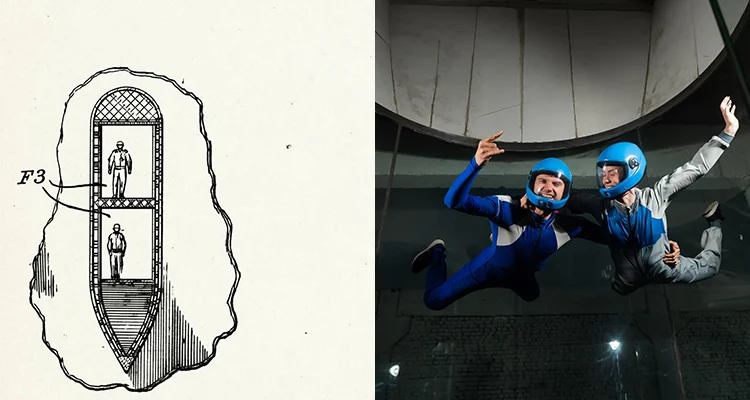
Jean St-Germain proposed an entire building designed to make people float in midair. He even gave it a name: a levitationarium.
Described in US Patent 4,457,509, granted on July 3, 1984, the concept involved a specially designed chamber with powerful fans producing an upward stream of air. The airflow would be strong enough to lift a person off the ground and keep them suspended.
The patent described the installation as both an amusement attraction and a training facility for parachutists who wanted to practice free-fall techniques.
Interestingly, the basic idea resembles modern indoor skydiving facilities, where powerful vertical airflow allows people to experience the sensation of free-falling.
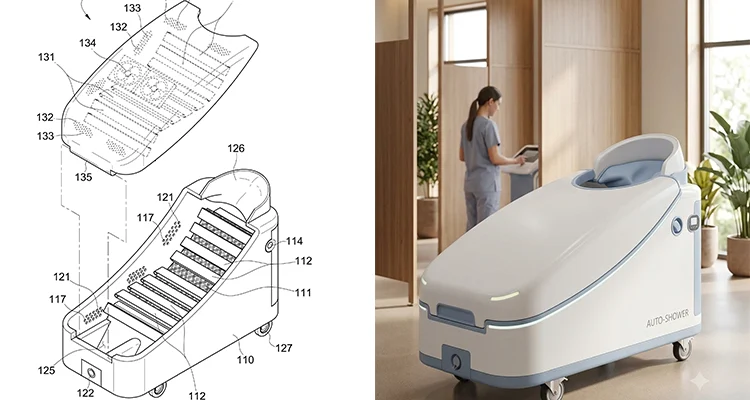
What if you could take a shower without washing yourself? A South Korean invention proposed an automatic shower device that could do almost everything for the user.
The invention, described in South Korean Patent 10-2107333 and granted on May 7, 2020, was designed for elderly people and people with physical disabilities who have difficulty washing themselves.
According to the patent, the device uses a specially designed body chamber with water-spraying nozzles. These spray water over the user’s body for washing. The machine also includes a scrubbing mechanism and air nozzles that blow air to dry the body.