Why Do Flamingos Stand on One Leg? And Five Other Strange Facts About Them
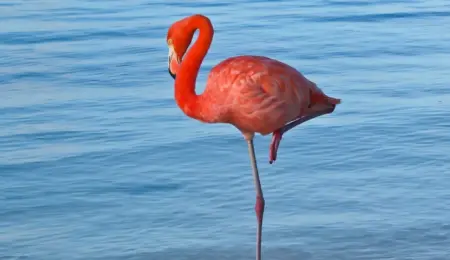
If you have ever watched a flamingo at a zoo or in a nature documentary, you have probably asked yourself why flamingos stand on one leg. It looks uncomfortable, yet these pink birds can balance on a single thin limb for hours—even while fast asleep. Scientists have studied this habit closely, and here’s what they found.
Standing on one leg takes almost zero muscle effort
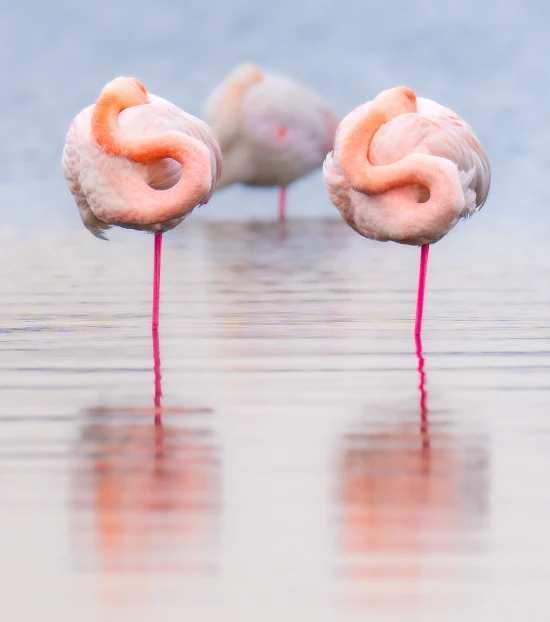
Standing on one leg requires almost no active muscle effort for a flamingo. In a 2017 study published in Biology Letters, researchers at Georgia Tech and Emory University discovered that a flamingo’s leg joints lock into place when its body weight shifts over one foot.
This passive support system allows the bird to stand motionless without muscle fatigue—so effectively that even flamingo cadavers can stay balanced on one leg when positioned upright.
Tucking one leg up into their warm body feathers also reduces heat loss. Because flamingos spend hours standing in cold water, keeping one foot out of the water helps them conserve body heat.
Scientists once wondered if the pose helped flamingos escape predators faster, but behavioral studies found that lifting one leg actually slows their takeoff—confirming that warmth and energy conservation are the real reasons behind the stance.
While their balancing act gets the most attention, flamingos have plenty of other unusual traits. Here are five strange facts about them.
1 They are gray until their diet turns them pink.
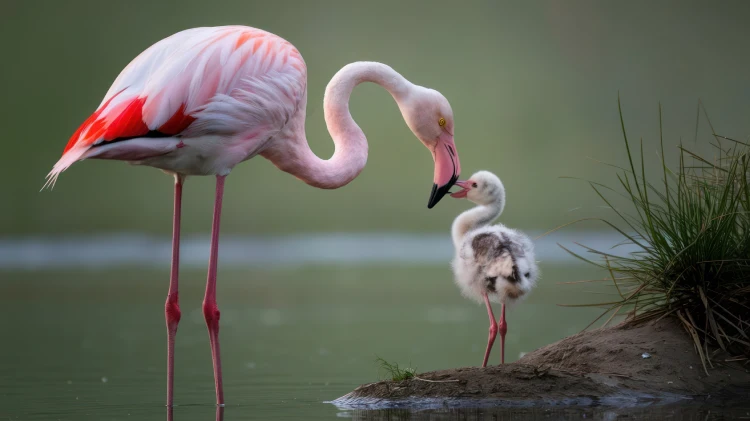
Flamingo chicks hatch with soft gray or white feathers. They get their famous pink or orange color later from their diet. Algae and brine shrimp contain natural pigments called carotenoids, which the bird’s digestive system breaks down and deposits into its growing feathers.
2 They eat with their heads upside down.
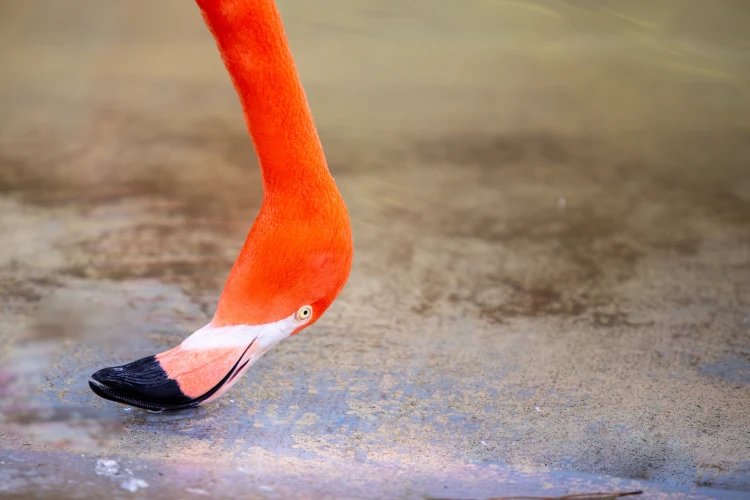
A flamingo’s beak bends sharply downward, acting like a built-in strainer. To eat, the bird dips its head upside down into the water and opens its bill just a bit. It then pumps its thick tongue back and forth, pushing water through tiny comb-like fringes inside its beak, trapping shrimp and algae while letting mud and water drain out.
 3. Both parents produce milk to feed their chicks.
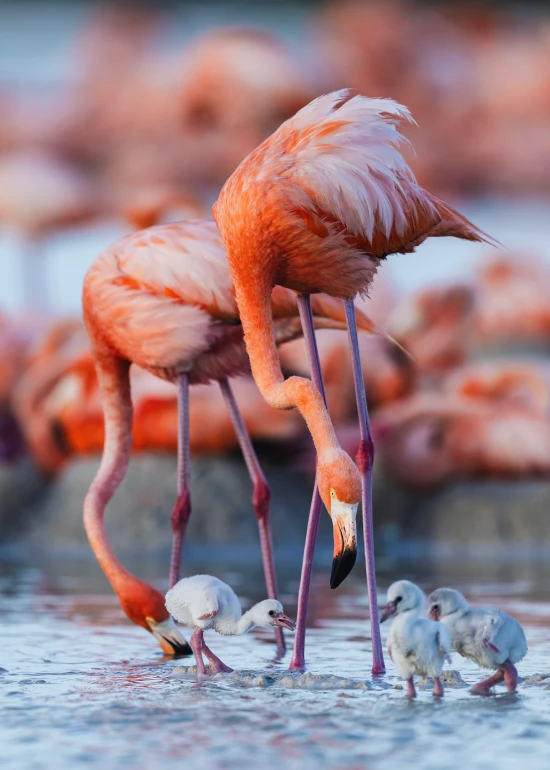
Male and female flamingos both produce a nutrient-rich fluid in their upper digestive tract called crop milk. Despite the name, it is bright red because it is packed with fat, protein, and the same carotenoid pigments that color their feathers. Parents drip this liquid straight into their chick’s mouth for the first two months of life.
4 Their “backward” knees are actually ankles.
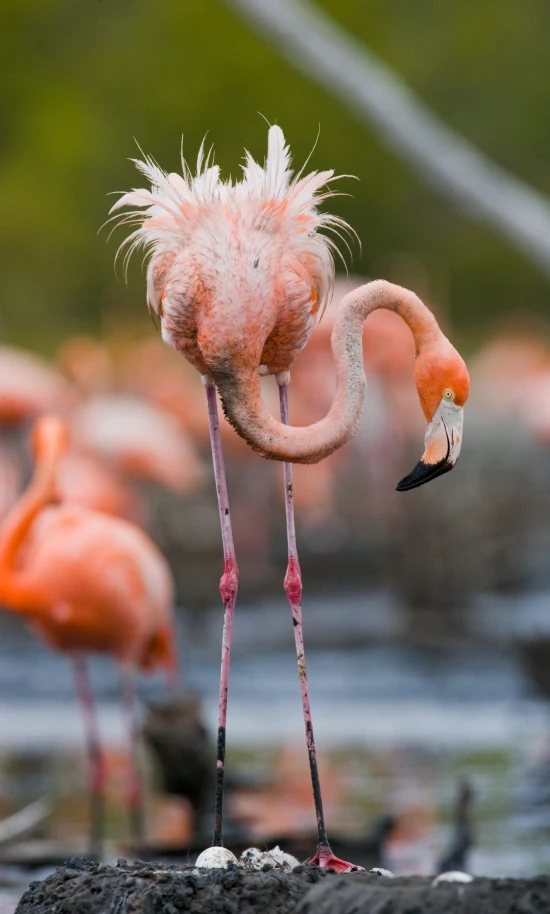
When a flamingo bends its leg, the joint looks like a knee bending the wrong way. That joint is actually the bird’s ankle. A flamingo’s real knee is tucked high up near its body, hidden beneath its feathers.
5 They thrive in toxic lakes.
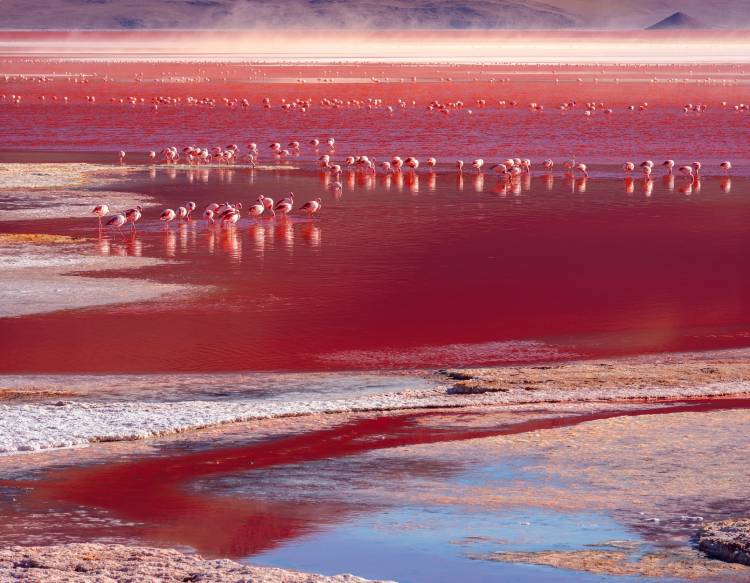
Lesser flamingos thrive in harsh lakes that would end most other animals. Their tough skin protects their legs from caustic water, and specialized glands in their heads filter excess salt out of the water they drink, draining it through their nostrils.