10 Things That Are Stronger Than They Look
Strength is not always easy to spot. A macadamia shell looks small and harmless. A sheet of paper looks weak. A glass drop looks ready to shatter. Yet each can withstand surprisingly large forces because of its material, structure, or shape. Some living creatures are equally unusual. Here are 10 examples of strong things that can take far more punishment than they look like they can.
1 Your tooth enamel is harder than bone.
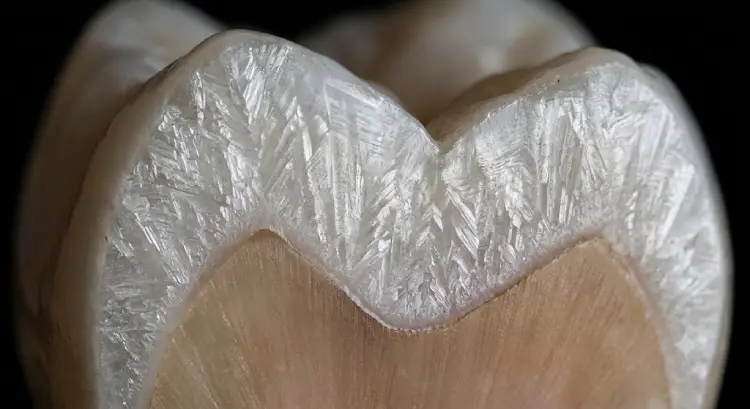
If you had to guess the hardest substance in your body, bone would be an understandable choice. It is actually tooth enamel.
Enamel is the hard outer covering of your teeth and is the hardest material in the human body. It is made up of roughly 96% mineral by weight, giving it exceptional hardness and stiffness.
Its microscopic structure also matters. Enamel contains tightly organized mineral crystals that help it withstand years of biting and chewing.
But hard does not mean unbreakable. Enamel can be damaged by acids, decay, and mechanical stress, and the body cannot simply grow back a lost layer of enamel.
2 Tardigrades can survive extreme pressure.
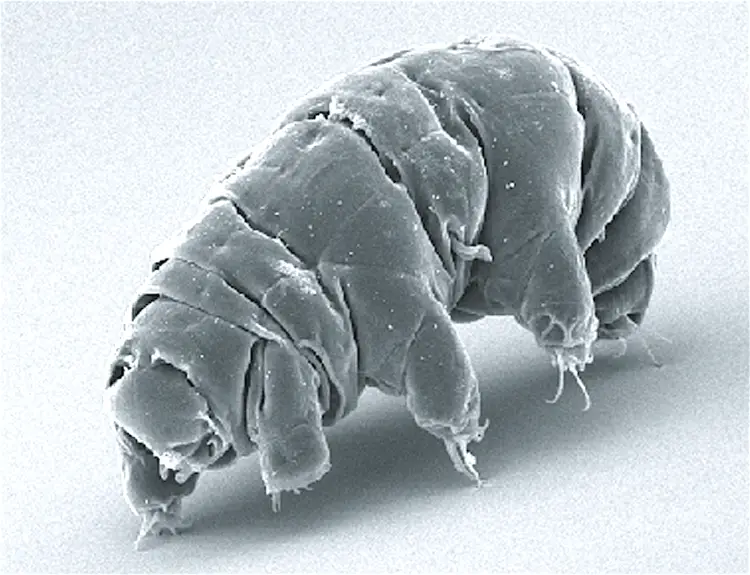
Tardigrades are microscopic animals, but their survival abilities are anything but ordinary.
In a laboratory experiment published in Nature, dehydrated tardigrades survived pressures as high as 600 megapascals. That is roughly 6,000 times atmospheric pressure at sea level.
Their resistance is closely connected to their ability to enter a dehydrated dormant state. Tardigrades have also survived exposure to the vacuum of outer space in experiments, showing just how unusual their tolerance to extreme environments can be.
3 An ironclad beetle can take 39,000 times its body weight
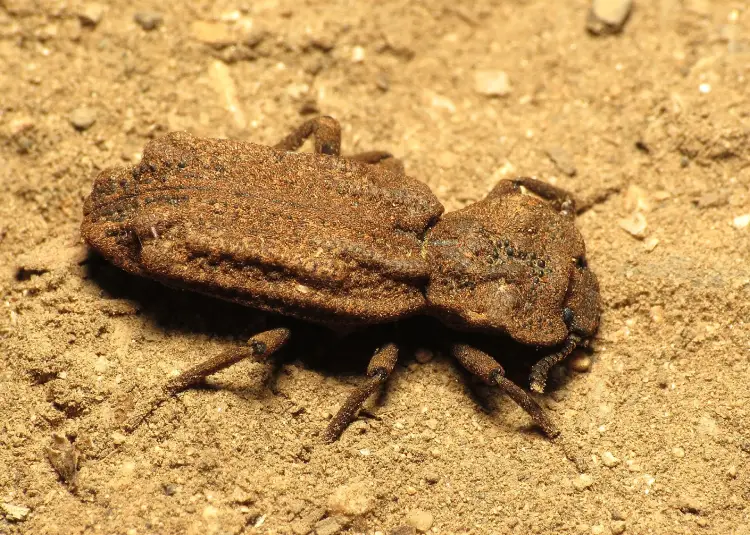
The diabolical ironclad beetle has an unusually tough exoskeleton. Researchers found it could withstand a crushing force of about 39,000 times its own body weight.
For a 1-gram beetle, that would be equivalent to about 39 kilograms of force.
Its secret is partly in the design of its hardened wing covers, called elytra. They contain interlocking structures and layers that help distribute loads and prevent sudden structural failure.
Engineers have studied these features as inspiration for stronger lightweight structures. The beetle shows that how a material is assembled can matter as much as what it’s made from.
4 Macadamia shells can withstand thousands of newtons of force.
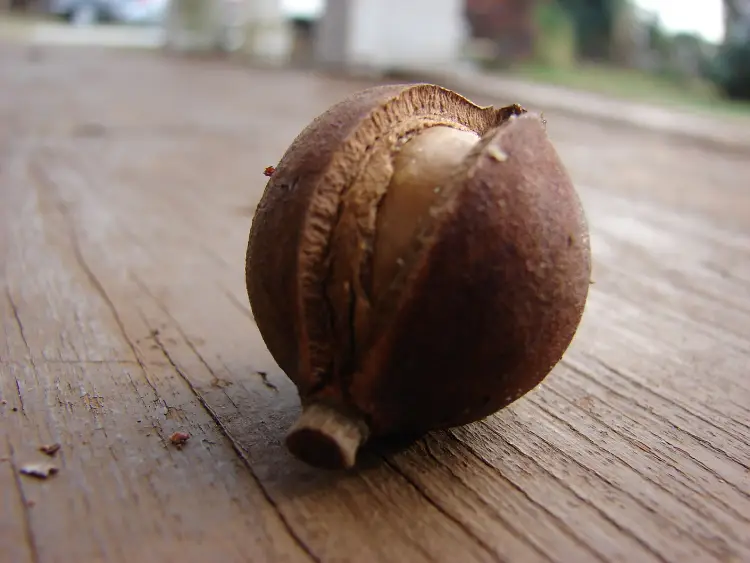
Macadamia nuts are among the hardest nuts to crack. In laboratory testing, researchers found that about 1,800 to 4,000 newtons of force were needed to break macadamia seed coats. Another study measured an average cracking force of about 2,240 newtons.
To put that into perspective, 2,240 newtons is roughly comparable to the downward force produced by the weight of about 230 kilograms under Earth’s gravity. That does not mean a 230-kilogram object was literally placed on the nut; the experiments measured cracking force under controlled conditions.
The shell’s strength comes from its complex internal structure. Researchers found several structural levels that help resist cracks and distribute mechanical stress.
5 Ants can carry more than 50 times their weight.
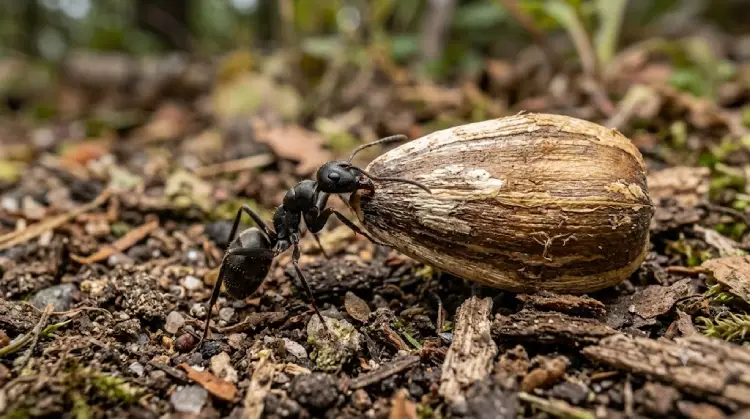
An ant can look almost weightless when it moves across a table. Relative to its size, however, it can be remarkably strong.
The Smithsonian Institution reports that ants can lift and carry more than 50 times their own weight.
The impressive number is partly explained by the physics of small animals. As an animal becomes smaller, its body mass decreases faster than the cross-sectional area of its muscles. This gives small animals a much higher strength-to-weight ratio than larger animals.
That is why an ant can carry a load that would be impossible for a human if measured against body weight.
6 Paper tubes can support structural loads.
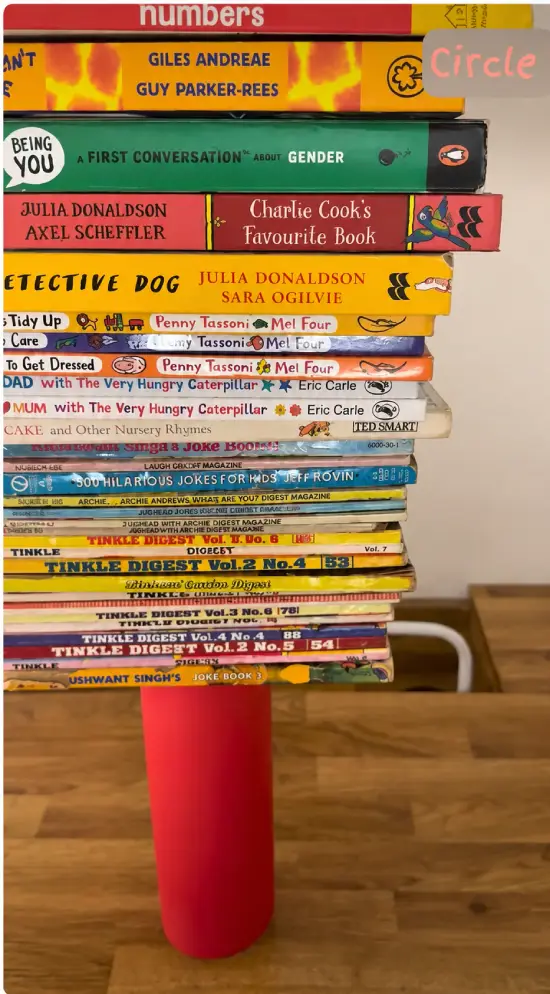
A flat sheet of paper tears easily. Roll that same paper into a thick tube, however, and it can become a surprisingly capable structural material.
Researchers have tested specially manufactured paper tubes for use in buildings. In a 1998 study, engineers tested tubes about 25 centimeters in internal diameter under compression and bending.
At around 10% moisture content, the tubes had a compressive strength of about 9.8 megapascals. They also had a bending strength more than 1.4 times their compressive strength.
The trick isn’t that rolling makes paper chemically stronger. The shape changes how the load travels through the material. A tube can carry forces along its length much more effectively than a flat sheet.
This is the same basic structural idea behind many lightweight columns and hollow engineering components.
7 Some spider silk can rival steel.
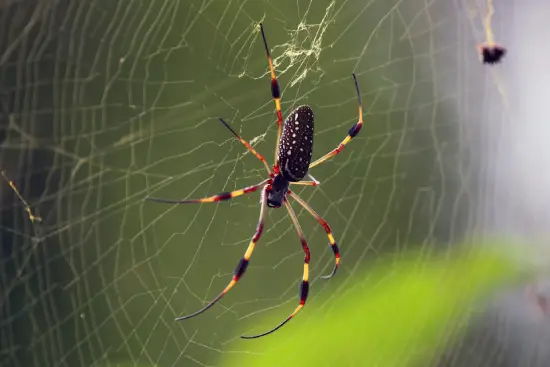
Spider silk has earned its reputation as an unusually strong biological material for good reason.
Spiders produce several types, each designed for a different job. One of the strongest is major ampullate silk, also known as dragline silk. Spiders use it for strong structural threads, including the lines they hang from and the main supporting threads of their webs.
Dragline silk is impressive because it combines three qualities that are difficult to find together: strength, stretch, and toughness. Some dragline silks can withstand a pulling force of around 1 gigapascal (GPa) before breaking, putting them in the range of some high-strength steels.
8 An eggshell can take surprisingly heavy loads.
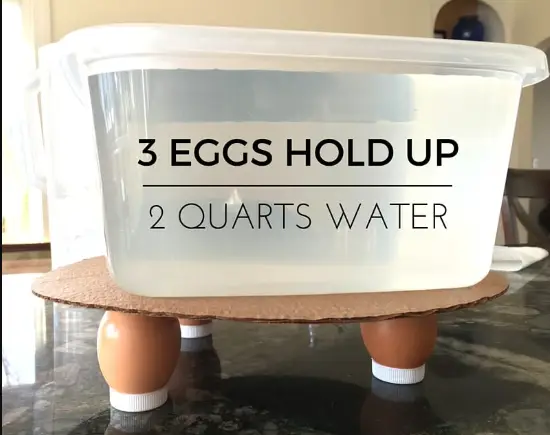
An eggshell looks fragile because a sharp impact can break it instantly. Apply force differently, though, and the result can change dramatically.
Research on eggshells shows they can withstand impressive distributed compressive loads. In one study, researchers compressed eggshells from different bird species along their major axis, with ostrich eggs surviving loads above 5,000 newtons.
The curved shape is important. An eggshell behaves somewhat like a thin dome, allowing forces to spread through the shell rather than concentrating at a single point.
That is why an egg can be surprisingly difficult to crush when squeezed along the right direction, yet easy to crack with a sharp point.
9 A woodpecker’s head takes impacts of around 1,000 G.

A woodpecker may look delicate, but its head is built to withstand repeated, violent impacts. When a woodpecker drives its beak into a tree, its head can reach speeds of around 6–7 meters per second and experience deceleration of roughly 1,000 times the acceleration caused by gravity. That is an extraordinary amount of force for such a small animal.
To put 1,000 G into perspective, 1 G is the acceleration we experience from Earth’s gravity. A 1,000-G deceleration means the head stops incredibly quickly, in just a few milliseconds. Yet woodpeckers can repeat these impacts again and again while drilling into trees.
So what makes their heads so resistant?
The answer is not simply a built-in shock absorber, as scientists once thought. A 2022 study that measured real woodpecker impacts found that their skulls behave more like a stiff hammer than a cushion. Keeping the head rigid helps the bird drive its beak into hard wood efficiently, instead of wasting impact energy by letting the skull flex.
10 A glass drop can survive a hammer blow.
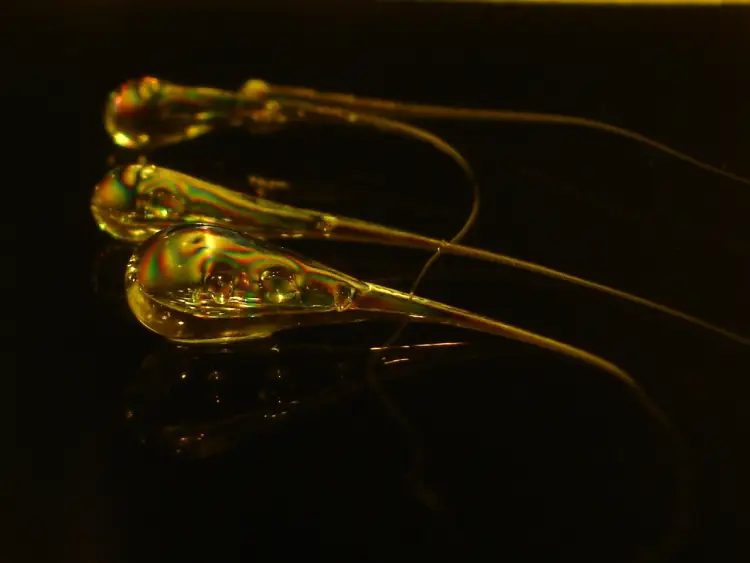
Glass is usually associated with fragility. A Prince Rupert’s drop shows how misleading that assumption can be.
The drop is made by dropping molten glass into cold water. The outside cools and solidifies rapidly while the inside cools more slowly. This creates powerful compressive stresses near the surface. These stresses prevent cracks from moving easily through the glass.
As a result, the thick bulb of the drop can withstand a direct hammer blow. In controlled experiments, Prince Rupert’s drops have survived loads exceeding 10 kilonewtons.
One dramatic weakness remains: the thin tail. Break it, and a crack can race through the stressed interior, causing the entire drop to explode into thousands of fragments.