Mom Turns Her Arm Into a Keyboard for Her Non-Speaking Son
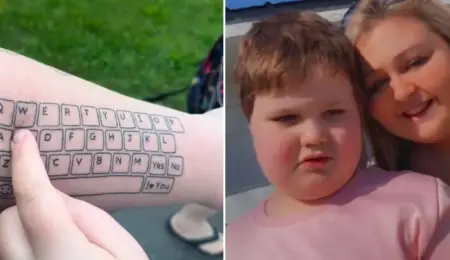
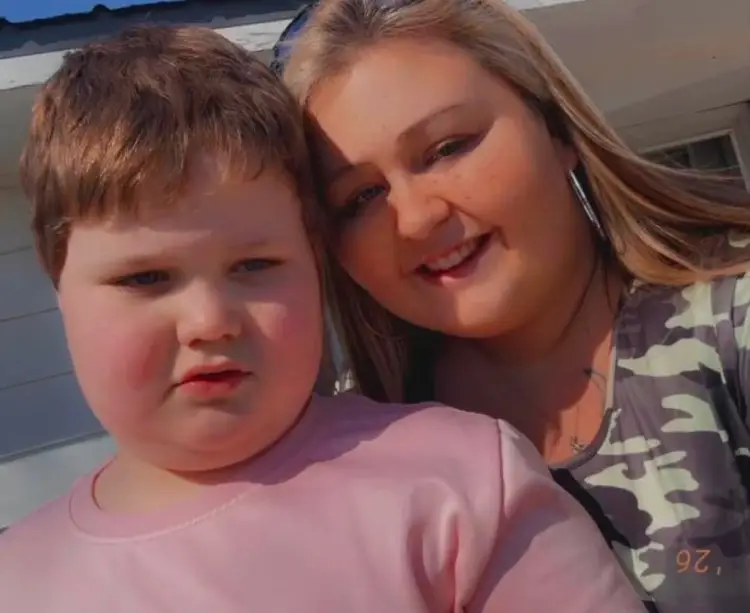
When 11-year-old Hunter Fletcher’s communication device ran out of battery during breakfast, his mother Jessica Fletcher found an unusual backup. She inked a keyboard tattoo on her arm so her non-speaking autistic son could still communicate with her without relying on technology.
Hunter’s communication device stopped working just as he was about to order breakfast.
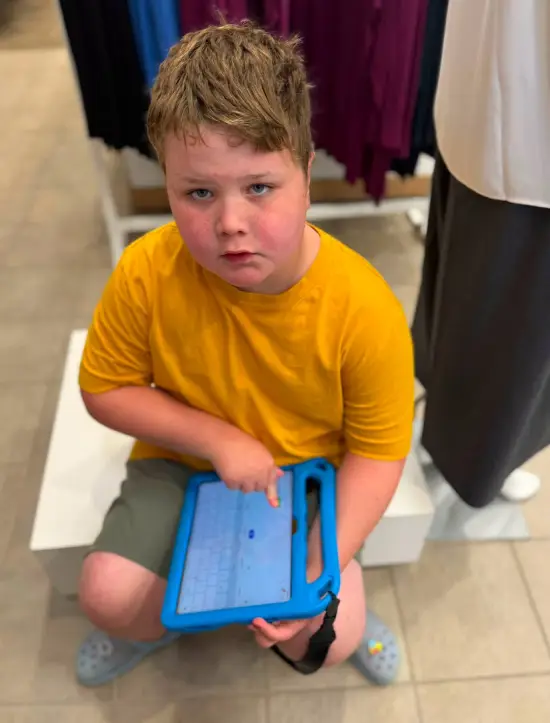
Hunter normally communicates using an augmentative and alternative communication (AAC) device, an iPad with a speech app that lets him select letters, words and symbols. He also uses gestures and some sign language, although motor-skill difficulties can make writing and signing more difficult.
During a breakfast outing, however, his iPad ran out of power before he could place his order.
Jessica initially used a pen and paper, writing out the alphabet so Hunter could spell out what he wanted. Instead, Hunter turned the paper over, drew a keyboard and began pointing to the letters.
That gave Jessica an idea.
If the keyboard layout worked for Hunter, she could create one that would always be available.
Jessica had a keyboard tattooed on her forearm so Hunter would always have a backup.
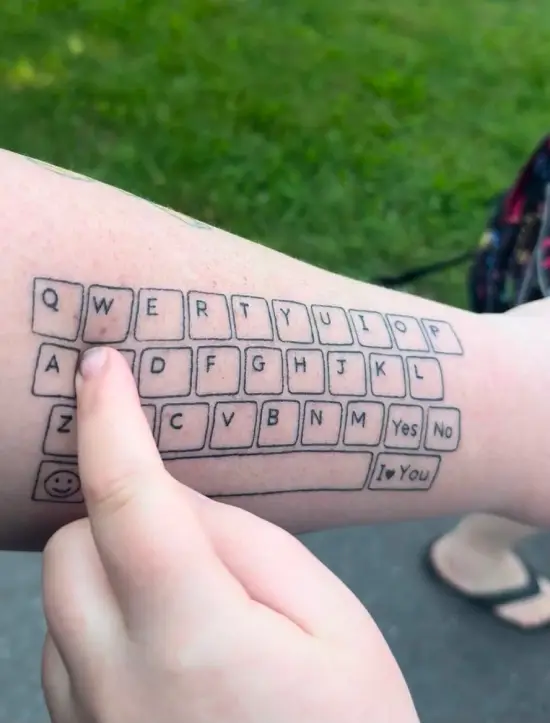
Jessica worked with a tattoo artist to put a keyboard on her left forearm. The design includes letters as well as symbols such as happy and sad faces and an “I love you†button.
When she showed Hunter the finished tattoo, the first word he communicated with it was “Mama.â€
The tattoo gives him a communication option that does not need charging or an internet connection. It is also useful in situations where his electronic device cannot be used, such as swimming.
Jessica chose her left arm because it was practical for finger spelling, while Hunter usually sits on her right side when they are out together.
The tattoo has also given Hunter a way to communicate privately with his mother.
Hunter’s AAC device can speak his messages aloud, which means people nearby may hear what he is saying. The tattoo allows him to spell directly to Jessica without broadcasting the conversation.
Jessica said this has been particularly meaningful because it gives Hunter an opportunity to communicate privately with her.
She has also noticed changes in how he expresses affection. According to Jessica, he now tells her that he loves her several times a day and has become more comfortable with physical affection.
The idea spread after Hunter’s school friends wanted their own way to communicate with him.
Jessica shared a video of Hunter using the tattoo, and the idea attracted attention from other families and professionals.
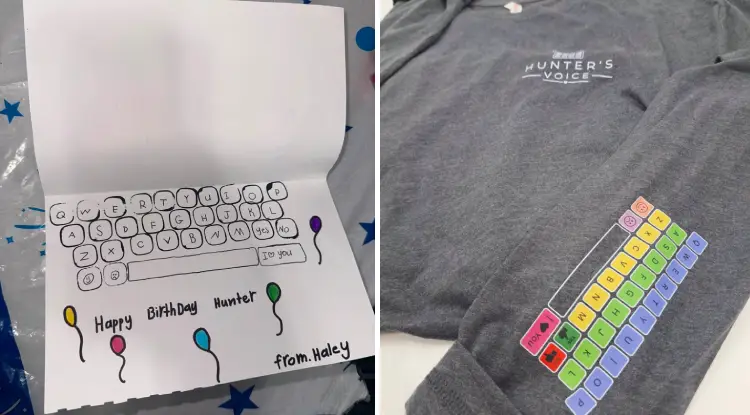
Hunter’s school friends asked for keyboard shirts so they could communicate with him on the playground. Jessica later partnered with a clothing company to create shirts with keyboard designs along the sleeves.
Teachers, nurses, doctors and first responders have also contacted her about the idea. Tattoo artists in several countries have offered to create similar tattoos for parents of non-speaking children for free.
Jessica’s point is not that a tattoo should replace an AAC device. Rather, she wants non-speaking people to have multiple ways to communicate, depending on the situation.