How an Artist Created a Tree That Grows 40 Different Fruits
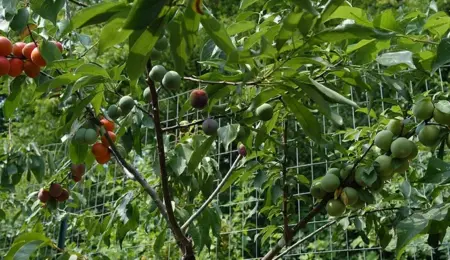
Imagine picking peaches, plums, apricots, nectarines, and cherries from the same tree. It sounds impossible, but artist and Syracuse University professor Sam Van Aken made it happen.
The tree uses an ancient agricultural technique called chip grafting to join 40 varieties onto one trunk.
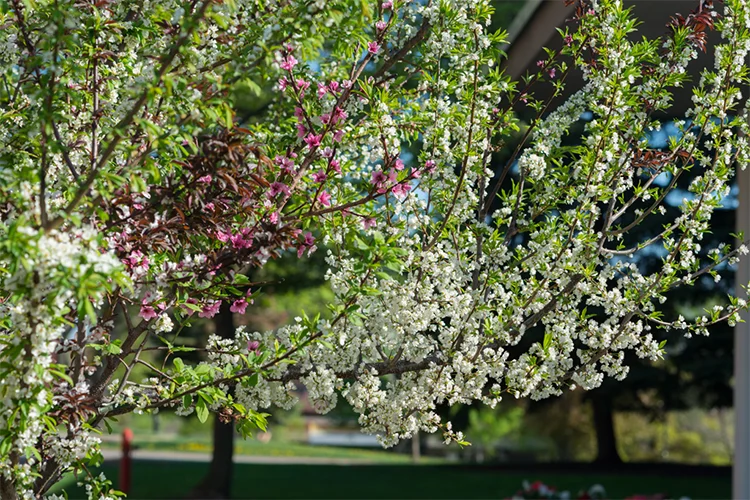
For most of the year, the Tree of 40 Fruit looks like an ordinary fruit tree. But when spring arrives, its branches bloom in different shades of pink, crimson, and white. Each color comes from a different variety grafted onto the tree.
By summer, those same branches begin producing different fruits. One branch might grow peaches while another produces plums or cherries.
Â
Van Aken achieved this using a gardening technique called grafting. It involves joining parts of different plants, so they grow together as one.
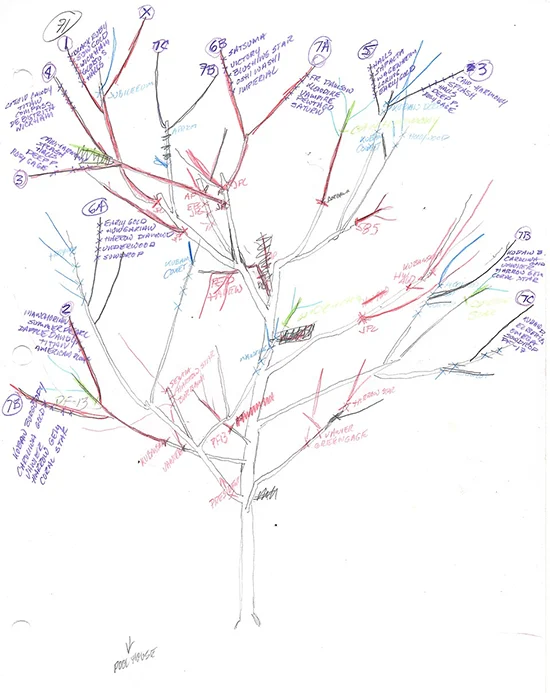
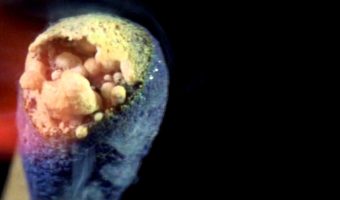
He started with a rootstock, the lower part of a tree that provides its roots and trunk. He then added buds from other fruit trees using a method called chip grafting.
This involves cutting a small piece of bark containing a bud from one tree and inserting it into a matching cut on another. They wrapped the area and left it to heal. If the graft succeeds, the bud develops into a new branch that produces fruit of its original variety.
Van Aken repeated this process until the tree could support 40 different varieties. It took several years because each graft needed time to establish itself.
Â
Sam Van Aken started the project in 2008 after buying a dying research orchard in New York.
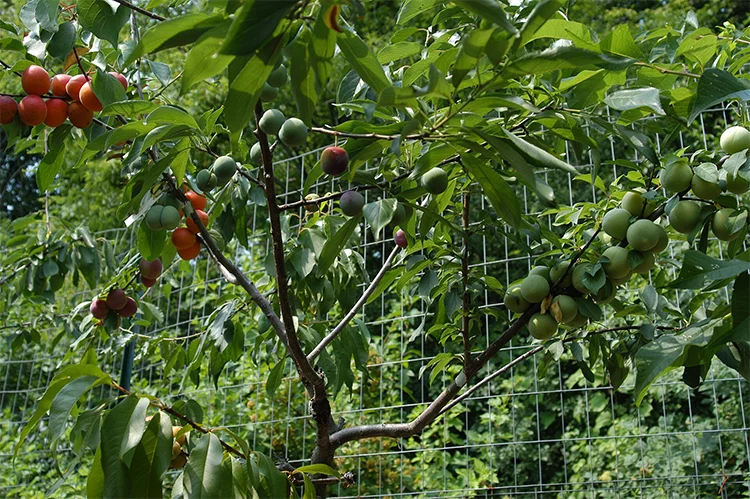
The project began in 2008, but Van Aken’s motivation went beyond creating an unusual tree.
While researching stone fruits in New York, he discovered an old orchard containing heirloom, native, hybrid, and antique varieties. The orchard was at risk of being lost, so he leased it with help from grants from Syracuse University and the nonprofit Creative Capital.
Â
He began collecting and growing these varieties in a nursery. Today, he works with more than 250 stone fruit varieties, including some that are no longer commercially available.
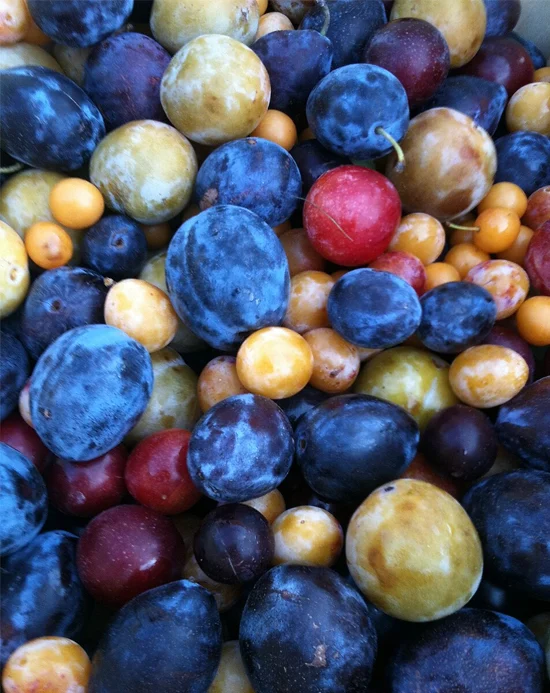
The Tree of 40 Fruit became a way to preserve these varieties on a single tree rather than allowing them to disappear.
The number 40 was also deliberate. Van Aken chose it partly for its historical and biblical significance, where it often represents abundance or something beyond calculation.
The first tree, known as Tree 75, was created in 2008 and dedicated at Syracuse University in 2011. It was also intended to symbolize acceptance and dialogue across differences.
It takes nine years for the tree to grow, and the project keeps expanding.
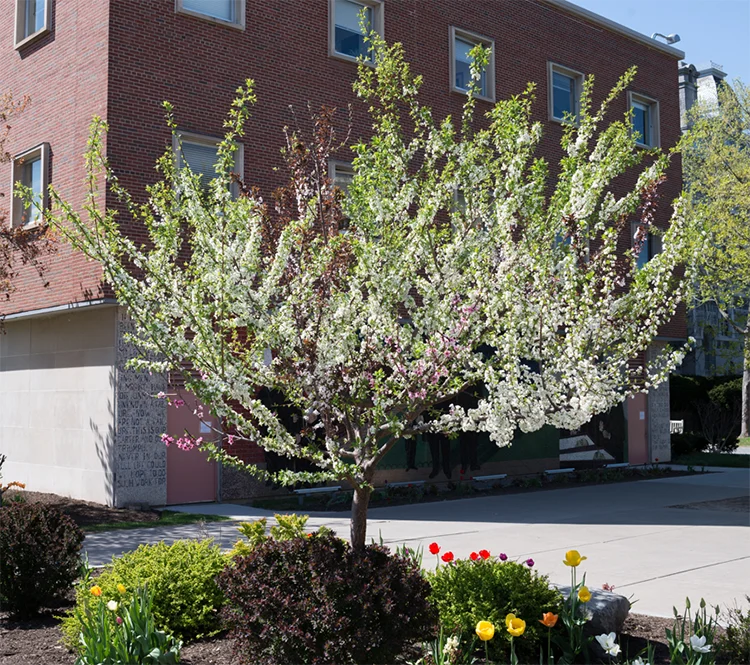
Creating one of these trees requires patience. According to Syracuse University’s Art and Architecture department, a Tree of 40 Fruit takes at least nine years to reach its peak. The grafts take about five years to develop, followed by another four years before all the different fruits appear.
Â
Van Aken’s work has also expanded beyond individual trees. One of his larger projects, The Open Orchard, is located on Governors Island in New York City. It contains 102 fruit trees, each combining multiple varieties of heirloom and antique fruits that were once grown in the region.
The orchard acts as a living archive of fruit varieties that have largely disappeared because of industrial agriculture and the spread of commercial farming. Nearly 100 additional trees have also been planted in community gardens across New York City.