Influencer Bella Longuinho Shares Her Gender Transition Journey

Isabella Longuinho, a twenty-four-year-old Brazilian digital creator previously recognized online as Zé Longuinho, documented her gender transition for her social media followers throughout the year. She first gained digital visibility in 2021 through a viral dance video, when her online profile centered heavily around fitness and bodybuilding.
Influencer Bella Longuinho initiated a public shift in her identity and physical appearance during early 2025.

Upon announcing her name change to Isabella, she began a structured process to alter her physical form. This transition involved shifting her athletic training routine to reduce her heavily muscled physique, resulting in a weight loss of over twelve kilograms.
Longuinho publicly stated that this transformation was driven by a desire to find personal comfort within her own body rather than to satisfy external aesthetic standards. To achieve the physical alignment she sought, she underwent a series of cosmetic procedures, including facial feminization surgery, a rhinoplasty, and buttock augmentation using hyaluronic acid injections.
Longuinho traveled to Thailand to undergo gender reassignment surgery due to the country’s medical specialization.

Following her initial physical alterations, Longuinho decided to travel to Thailand for her gender reassignment surgery. Thailand has served as a primary international hub for gender-affirming healthcare since performing its first documented sex reassignment procedure in 1975.
Longuinho explained to her audience that the high volume of these daily operations performed by Thai medical teams significantly reduces the likelihood of surgical complications.
She specifically selected the penile, pelvic, and vaginal technique, which is recognized as one of the most innovative surgical methods available. This procedure utilizes skin from the penis combined with tissue harvested from the abdominal wall to construct the vaginal canal.
The technical integration of these tissues provides anatomical depth comparable to cisgender anatomy, preserves nerve pathways to maintain sensory capacity, prevents subsequent odor issues, and produces a standard aesthetic result.
The choice of an international clinic was motivated by comprehensive post-operative care rather than financial savings.
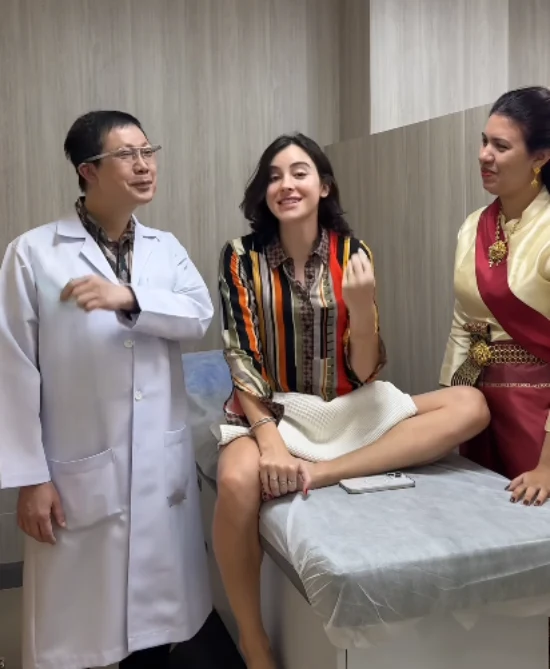
Longuinho clarified that her decision to seek treatment in Asia was based on the standard of clinical recovery support rather than a desire to reduce costs.
She had previously consulted with medical professionals in Brazil, where the private procedure was quoted at 130,000 Brazilian Reals. In comparison, the surgical procedure in Thailand cost 115,000 Brazilian Reals, but the addition of international round-trip airfare and accommodation brought the total financial investment to a level equivalent to staying in her home country.
The decisive factor for the influencer was the specialized twenty-eight-day post-operative care package included by the Thai facility. Under this recovery protocol, patients spend the first seven days under direct observation inside the hospital, followed by twenty-one days at a designated hotel connected to the clinic.
During the hotel stay, specialized nursing staff assist the patient daily with complex post-surgical requirements, including mandatory dilation protocols and localized wound maintenance. Longuinho emphasized that this continuous medical monitoring provided a level of personal security that justified the logistics of international travel.
Bella Longuinho’s public documentation details the precise logistical, financial, and clinical steps required for international gender-affirming care. By sharing the objective realities of her surgeries, the specific techniques used, and the real costs involved, her transparency provides clear insight into a highly specialized medical process.