Meet Tilly Lockey and Her Game-Changing Bionic Hands
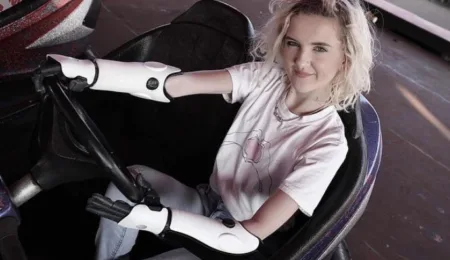
At just 19 years old, Tilly Lockey has already lived a life full of extraordinary challenges and achievements. Diagnosed with meningococcal septicaemia at only 15 months old, she lost her hands, forearms, and toes as a baby. What could have been a lifelong limitation has instead become the driving force behind her journey as a global inspiration.
With the support of her family, medical teams, and groundbreaking innovators at Open Bionics, Tilly now wears some of the world’s most advanced prosthetic arms—futuristic devices that are transforming not only her life but the field of prosthetics itself.
Losing her hands as a baby pushed Tilly Lockey and her mother to help design better prosthetics for young amputees.
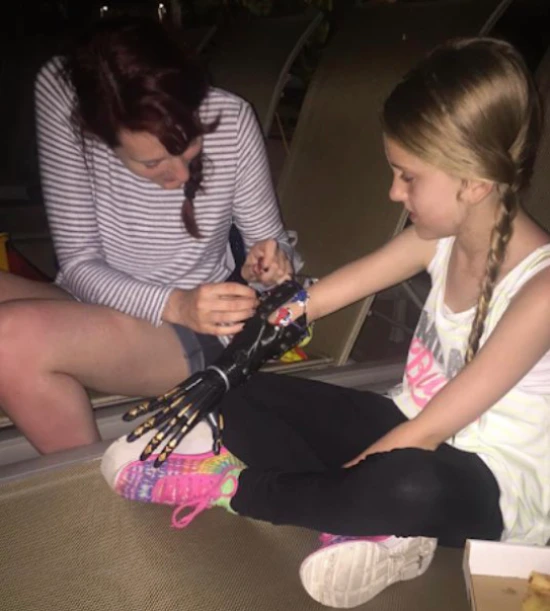
Tilly’s survival against meningitis was nothing short of remarkable. Doctors initially gave her almost no chance of making it through, but her resilience proved them wrong. Her mother, promising that one day she would have hands again, set out on a mission to work with researchers and engineers to improve prosthetics for child amputees.
This mission led to a partnership with Open Bionics, a company that pioneers affordable, 3D-printed prosthetic arms, known as the Hero Arm.
Early versions of prosthetic devices that Tilly wore were very basic—capable only of opening and closing—and designed to blend in by mimicking natural hands. But Tilly didn’t want to hide. She wanted to stand out, express herself, and show the world that her difference was a strength. The Hero Arm made that possible.
These lightweight, muscle-operated prosthetics enabled her to grip, pose, and perform everyday tasks with greater independence. The covers were customizable, making them as much a fashion statement as a medical device.
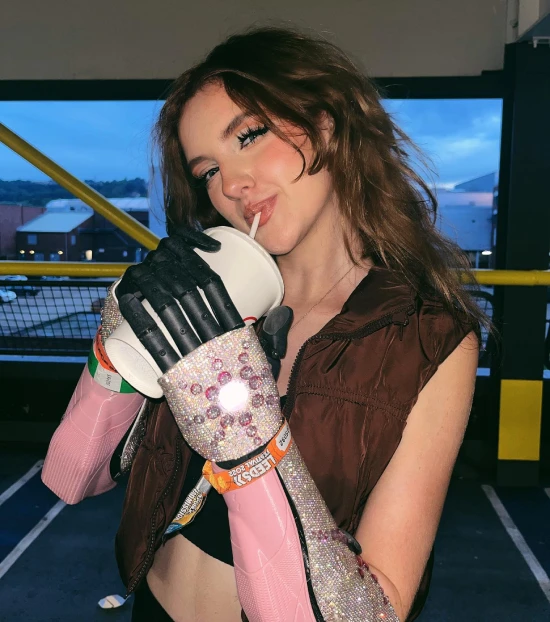
Her story took on a cinematic moment in 2019 when she was presented with special Alita: Battle Angel Hero Arms, created to celebrate the film’s release. She attended the premiere alongside the movie’s star, Rosa Salazar, and director James Cameron, showcasing the intersection of science, technology, and culture in a way few could have imagined.
The world’s first wireless bionic arms now allow Tilly to move prosthetics even when detached.
Today, Tilly is one of the first people in the world to wear the upgraded Hero Pro bionic arms—a major leap in prosthetic technology. Unlike older models, the new arms are wireless and can even be controlled when detached from her body, making them appear almost straight out of a science fiction film.
In a live demonstration, she showed how the detached hand could still move across a table, prompting viewers to compare it to the crawling hand “Thing†from “The Addams Family.”
The technology works through sensors that pick up signals from specific muscles in her arm. By flexing or squeezing, Tilly can open, close, and cycle through grip modes. While the movement begins in the brain, it is translated seamlessly into the prosthetic through these sensors, creating a natural extension of her body.
The precision allows her to do everything from holding a glass to playing video games.
This breakthrough demonstrates how far prosthetics have come in just a decade. No longer confined to purely functional use, these arms integrate independence, style, and identity. For Tilly, they represent not just a medical solution but a platform for expression. She can match her prosthetic covers with outfits, use them in performances, or simply showcase them as part of her unique personality.
Beyond the engineering marvel of her arms, Tilly has built a thriving presence as a motivational speaker, broadcaster, and influencer. She has won BBC’s “Got What It Takes,” performed for an audience of 20,000 at Radio 1’s “Big Weekend,” and hosted her own radio shows. Across social media, she inspires thousands by openly sharing her life, encouraging others to embrace their scars, differences, and individuality. [Source]