

Woman Diagnosed with Down Syndrome at 23 After a Series of Unexpected Test Results

Ashley Zambelli did not know she had Down syndrome until she was 23. The Michigan mother discovered she had a rare form called “mosaic Down syndrome” after doctors noticed that several of her pregnancies had been affected by trisomy 21, commonly known as Down syndrome. For Ashley, the diagnosis was not frightening. She said she was happy because it finally gave her an explanation for health and learning difficulties she had experienced for years.
Several pregnancies led doctors to question whether there was an underlying genetic reason.
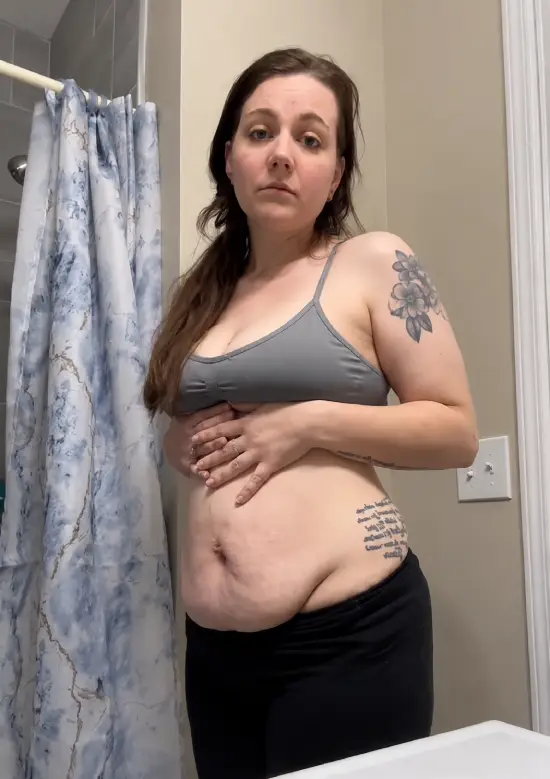
Ashley’s diagnosis came after an unusual pattern in her reproductive history. In 2019, she experienced a miscarriage, and genetic testing on the pregnancy showed that the fetus had trisomy 21, the most common form of Down syndrome. She later had a daughter, Lillian, who was also diagnosed with Down syndrome. Her second daughter, Evelyn, did not have the condition. During her next pregnancy, her daughter Katherine was again diagnosed with Down syndrome.
Doctors became concerned because Ashley was young and had experienced three pregnancies associated with Down syndrome. Her obstetrician referred her to a genetic specialist for further testing.
Down syndrome occurs when a person has an extra copy of chromosome 21, either in all or some of their cells. About 95% of cases are standard trisomy 21, while mosaic Down syndrome accounts for about 2% of cases.
Blood tests did not initially detect Ashley’s mosaic Down syndrome.

The genetic investigation did not immediately provide an answer. Ashley has explained that her karyotype and FISH tests using blood samples came back without evidence of the extra chromosome.
Doctors still suspected mosaicism and eventually tested cells from inside her cheek using a buccal swab. That test detected an extra chromosome 21 in a small percentage of the cells examined. Ashley has said that about 3% of the buccal cells tested positive for trisomy 21.
Mosaic Down syndrome occurs when a person has a mixture of cells. Some cells contain the usual 46 chromosomes, while others contain 47 chromosomes, including an extra chromosome 21. Because the proportion and distribution of affected cells can vary, people with mosaic Down syndrome can have very different characteristics and medical needs.
The diagnosis helped explain health problems Ashley had experienced for years.

Ashley said she had experienced several health and learning difficulties while growing up, but doctors had not connected them to a single condition.
She has described recurrent knee dislocations beginning in childhood, problems involving her jaw, a shoulder that was persistently out of position, and episodes of a very fast heart rate. She also said she struggled with school and had difficulty completing tests.
Before her diagnosis, doctors had considered other possible explanations for some of her problems. Ashley said she had wondered whether she could have lupus because her father had the condition. The eventual genetic diagnosis gave her a different explanation for at least some of the difficulties she had experienced.
Her case also illustrates why the condition cannot always be identified from appearance alone. Ashley has said that people sometimes questioned whether she really had Down syndrome because she did not have what they considered typical facial features.
The National Down Syndrome Society notes that people with mosaic Down syndrome may have fewer characteristics associated with Down syndrome than people with other forms. However, it also cautions that broad assumptions cannot be made because people with Down syndrome have a wide range of abilities and characteristics.
Ashley said she was happy when she finally received the diagnosis.
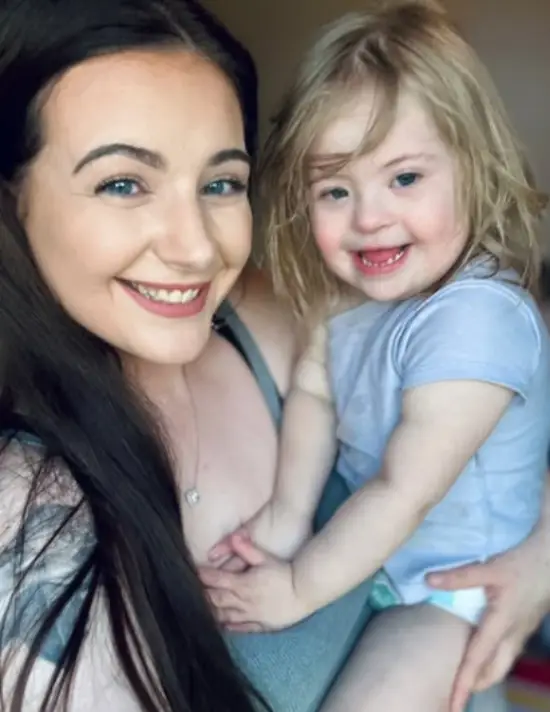
For Ashley, the diagnosis brought relief rather than distress.
She has described receiving the news while she was at the hospital with her daughter Lillian. Ashley said she was happy because she finally had an answer to questions that had followed her for years. She recalled that a nurse was surprised by her reaction because she did not understand why someone would be pleased to receive a Down syndrome diagnosis.
Ashley has also said that understanding her own diagnosis has helped her relate to her children who have Down syndrome. She believes that some of her own experiences, including taking longer to process certain things, help her understand what her children may experience.