Japan’s ‘Human Refrigerator’ Is Designed to Cool People in Just 10 Minutes
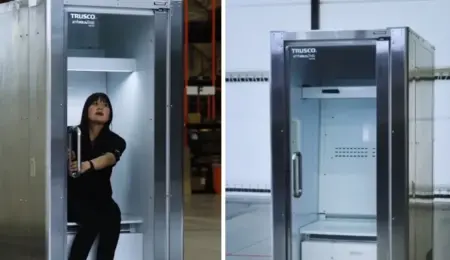
As heatwaves grow more intense across the world, a Japanese company has come up with an unusual solution: a walk-in booth that cools the human body in minutes. Known as the Do Hiemon Box, this stainless-steel “personal cooling booth” has launched in Japan and is being marketed as a faster way to cool down than a fan or air conditioner. With Japan recording its first day above 40C this year, the invention is arriving at a moment when heat safety has become a pressing public concern.
The Do Hiemon Box is a refrigerator-sized booth built to cool one person at a time.
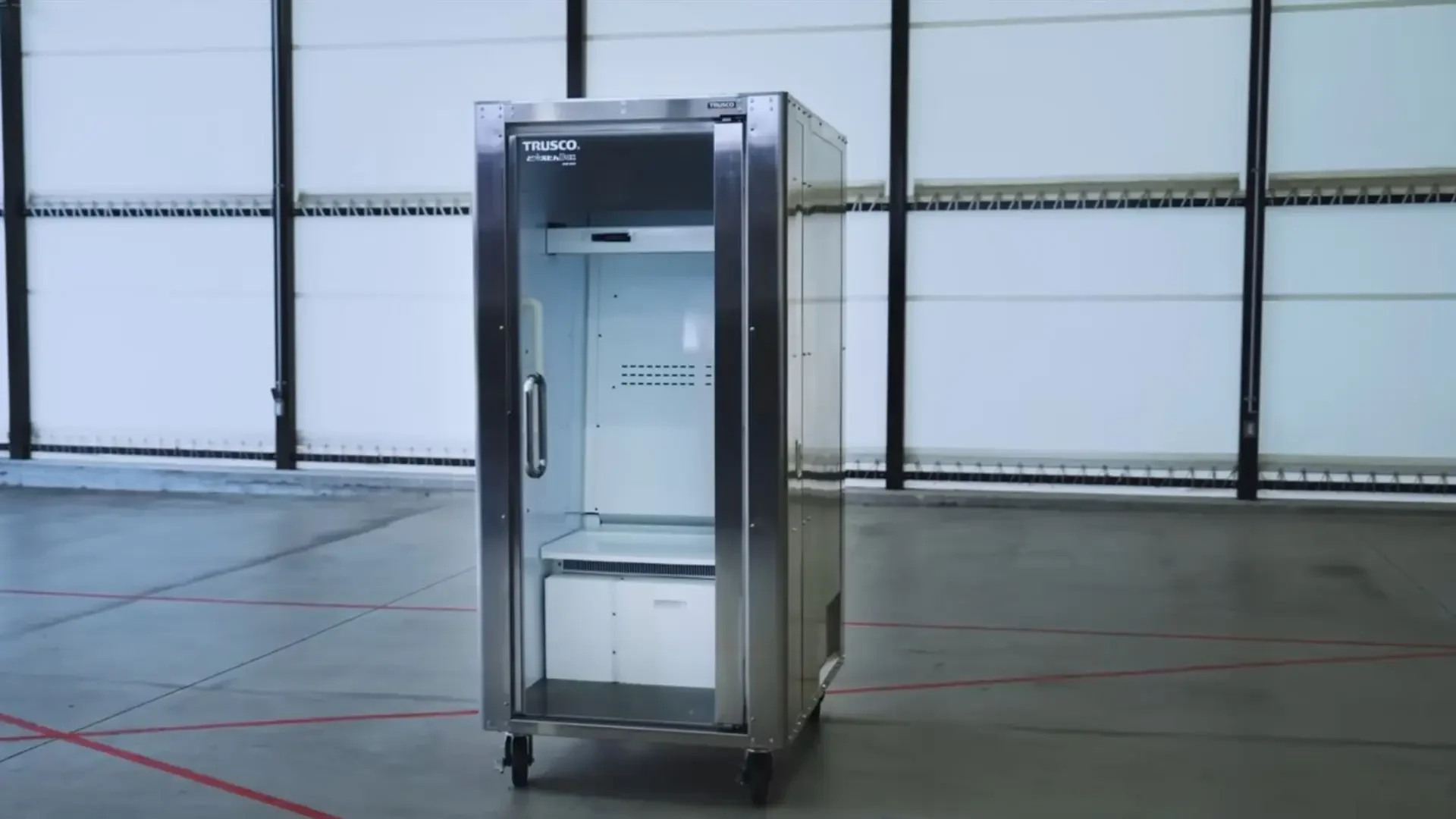
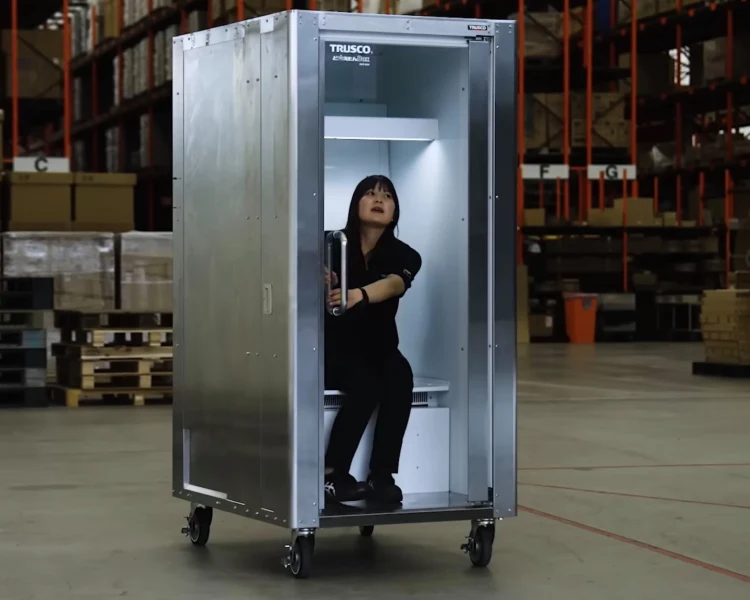
The Do Hiemon Box stands about 2.1 meters (7 feet) tall and looks similar to a large refrigerator. Instead of storing food, though, it is built to hold one person at a time. Users step inside, sit on a built-in chair, and are surrounded by cool air designed to bring down body temperature quickly.
The booth was developed by SDRS, a Japanese company that makes refrigeration units and vending machines, and is sold through the industrial equipment supplier Trusco Nakayama. Its design takes inspiration from Japan’s refrigerated vending machines, a familiar sight across the country.
Inside the booth, the temperature is kept at around 15C. Once a person sits down, air chilled to about 5C is blown directly at the head, neck, shoulders, and back. According to the manufacturer, users typically start to feel noticeably cooler within about five minutes, and spending roughly ten minutes inside may help ease symptoms of heat exhaustion by lowering body temperature rapidly.
The booth offers three different airflow and cooling settings, so it can be adjusted depending on how quickly a person needs to cool down. It also switches off automatically after 20 minutes, a safety feature meant to prevent users from getting too cold.
The booth targets workplaces where heatstroke risk is high, such as construction sites and warehouses.
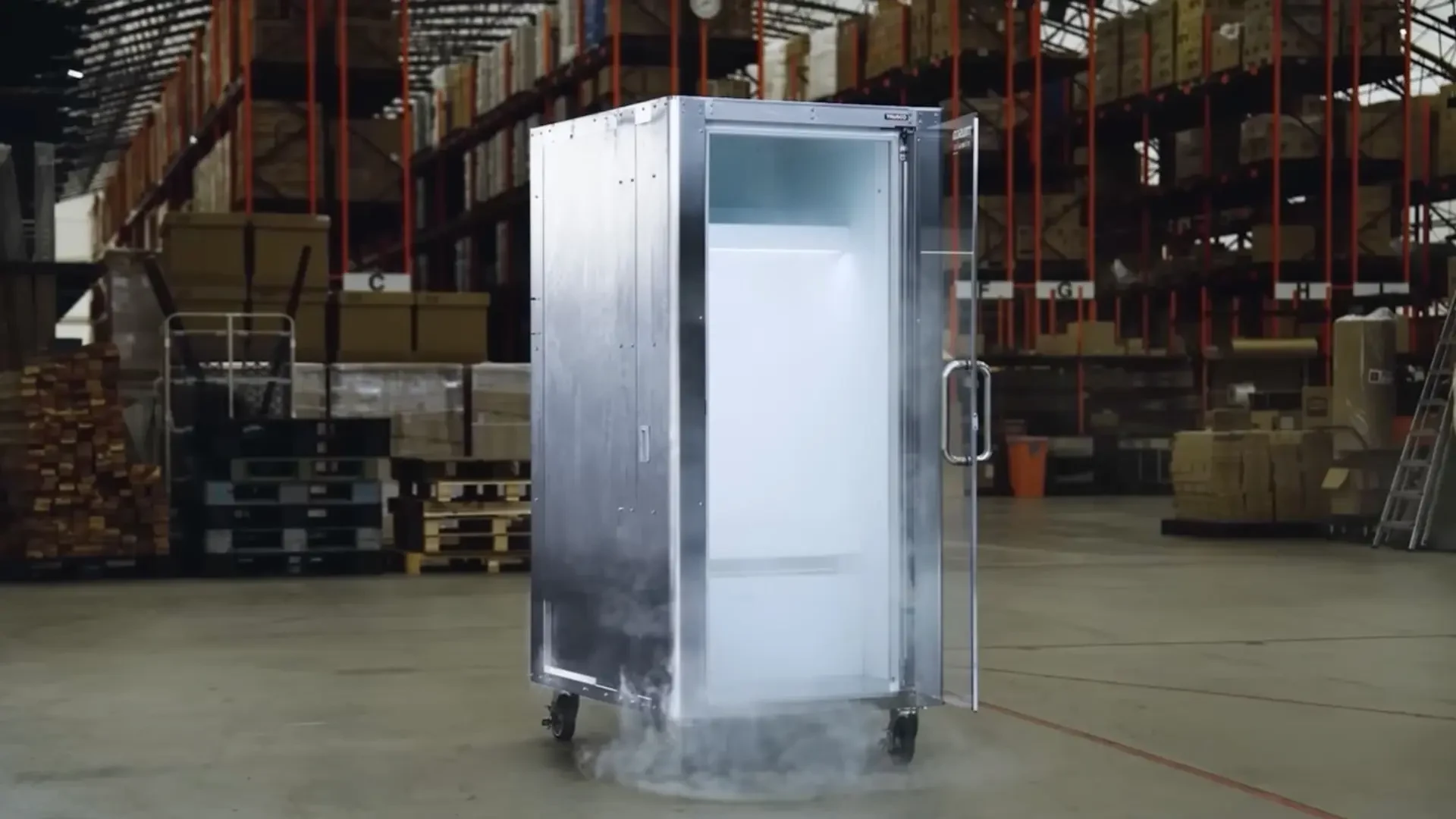
The Do Hiemon Box is aimed mainly at workplaces where people are regularly exposed to high temperatures, such as construction sites, factories, warehouses, and outdoor event venues. Because it does not require any installation and is mounted on wheels, it can be moved wherever it is needed, indoors or outdoors.
This makes it especially useful for employers who must protect staff working in the heat. Heat-related illness has become a growing problem in Japan. In a single day in mid-July, more than 450 people in Tokyo were taken to hospital for heatstroke, highlighting how quickly hot weather can turn dangerous. Businesses and local governments are increasingly looking for new tools to keep workers and the public safe as extreme heat becomes more common.
One appeal of the Do Hiemon Box is its running cost. The manufacturer says it costs about 7 pence (roughly 13-14 yen) per hour to operate, which works out to about a third of the cost of running a toaster. It is also said to use around half the electricity of a typical spot air conditioner, making it a relatively efficient option for businesses that need to cool workers quickly without a large energy bill.
The upfront price, however, is significant. The standard model sells for about 1.5 million yen ($9,200) plus tax. This positions the booth as a purchase mainly for companies and organizations rather than for individual households, at least for now.
The invention arrives as Japan introduces new terminology for days above 40c.
The launch of the Do Hiemon Box comes as Japan faces increasingly severe summers. The country recently introduced new terminology, kokushobi, meaning “cruelly hot day,” for days when temperatures climb above 40C. Records have also been broken across Europe this summer, adding to a broader pattern of intensifying heatwaves linked to rising global temperatures.
Some commentators have noted that inventions like the human fridge highlight a tension in how societies are responding to climate change. On one hand, scientific evidence points to reducing greenhouse gas emissions as the long-term solution to slowing global warming. On the other hand, tools like the Do Hiemon Box offer a more immediate, practical response to protect people from the heat that is already here.
The booth could eventually spread to public spaces, much like Japan’s vending machines.
For now, the Do Hiemon Box is being sold mainly to businesses through industrial equipment distributors in Japan. But given how quickly summer temperatures are rising, some observers suggest that cooling booths like this one could eventually become more widespread, potentially appearing in public spaces in the same way that vending machines already do across Japan.
Whether or not the human fridge catches on beyond workplaces, it reflects a wider shift: as extreme heat becomes a regular feature of summer rather than a rare event, both individuals and businesses are searching for new, practical ways to stay safe and cool.